
Remote Work-Life Balance: Key Adjustments

Remote Work-Life Balance: Key Adjustments
Remote work has blurred the lines between professional and personal life, leading to longer hours, burnout, and isolation. Workers are logging an average of 3.13 extra hours daily, with 88% reporting burnout. Without clear boundaries, the "always-on" culture is eroding well-being and productivity.
To regain control, focus on these actionable steps:
- Set boundaries: Create a dedicated workspace and establish start/end-of-day routines.
- Prioritize tasks: Use tools like malife to organize work based on impact and effort.
- Limit distractions: Schedule focus blocks and reduce unnecessary notifications.
- Stay connected: Schedule virtual check-ins and find ways to reintroduce social interaction.
- Reclaim personal time: Replace commuting time with wellness activities like exercise or meditation.
Small changes like these can restore balance, improve productivity, and protect mental health. Read on for more strategies to make remote work manageable and rewarding.
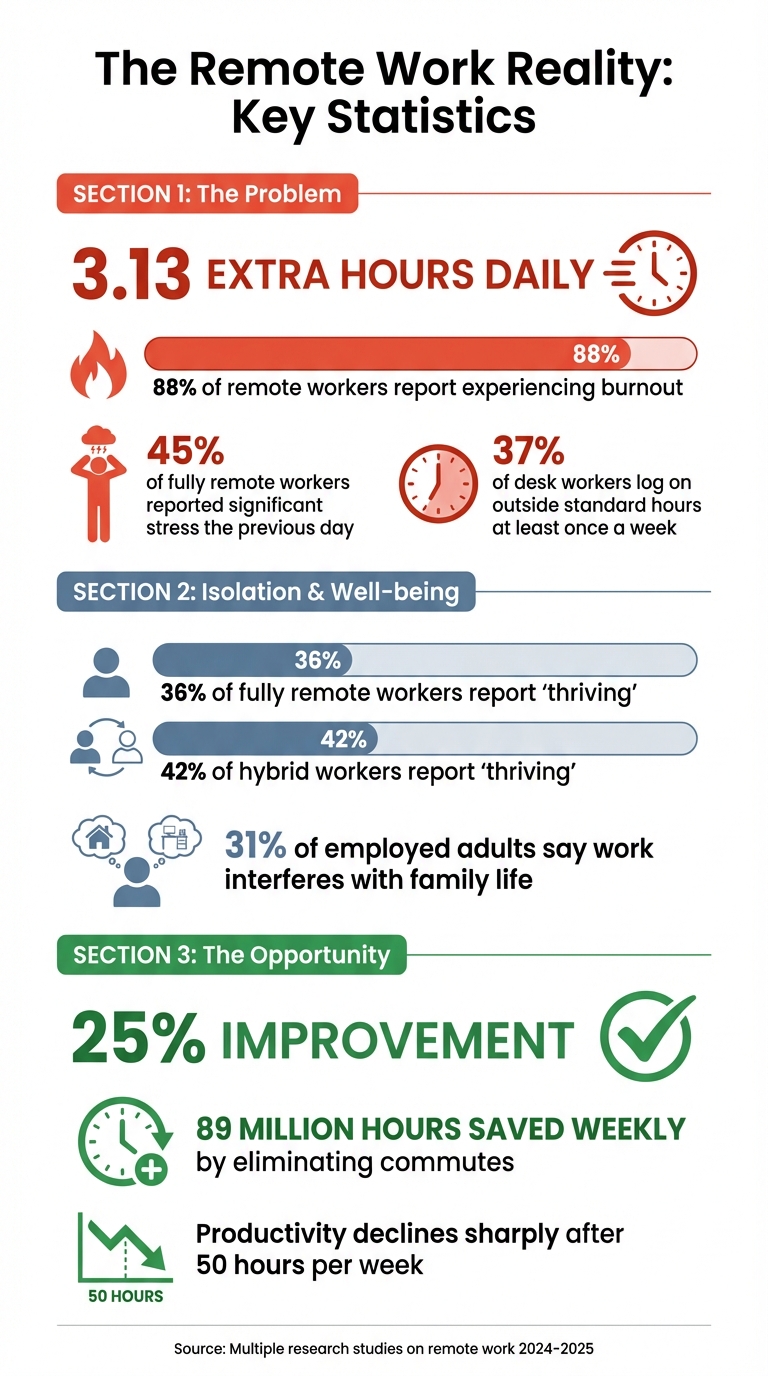
Remote Work Statistics: Hours, Burnout, and Productivity Impact
Common Remote Work-Life Balance Problems
Remote work once promised flexibility, but for many, the reality has been far more complicated. The shift from office desks to home setups has introduced a unique set of challenges that impact well-being, productivity, and mental health. These obstacles often pave the way for more significant issues like isolation and higher stress levels.
Work and Home Boundaries Disappear
When your "office" is your kitchen table or a corner of your living room, it’s easy for the lines between work and home to blur. The daily commute, once a natural divider between professional and personal life, has disappeared. Without this transition, many people find themselves checking emails during breakfast, taking calls over dinner, and working late into the night.
This lack of separation often leads to longer workdays. As Ellen Ernst Kossek from Purdue University explains, "These changes have not only made work more portable, diffusing into more hours of the day, but have also made it easier to work during personal time and space".
Adding to the issue is the "always-on" culture. Remote workers often feel obligated to respond immediately to messages, especially when emails or chats arrive after hours. The senders may not realize how much pressure recipients feel to reply right away. This constant connectivity creates a mental loop where work seems to follow you everywhere - whether you’re at home, eating, or even on vacation.
And as if blurred boundaries weren’t enough, remote work also amplifies feelings of isolation, further complicating the balance between work and life.
Feeling Isolated Without Social Contact
Gone are the casual conversations by the coffee machine or spontaneous chats in the office hallway. Remote work eliminates these small but meaningful interactions that help build workplace relationships. Without them, many workers feel increasingly isolated.
According to Gallup’s 2025 research, fully remote workers are more likely to experience loneliness, sadness, and even anger compared to those who work on-site or in hybrid settings. Only 36% of fully remote workers report "thriving" in their lives overall, compared to 42% of hybrid workers. As Ryan Pendell from Gallup explains, "Isolation can increase loneliness and, in the absence of social support, contribute to sadness and anger".
Interestingly, while remote workers often report higher engagement - 31% compared to 23% for on-site employees - this doesn’t always translate to greater happiness. The lack of informal support, like a quick word of encouragement or feedback during tough moments, can lead to "professional isolation", which becomes a significant source of stress over time.
Higher Stress and Burnout Rates
Blurred boundaries and isolation are a recipe for stress, and remote work has done little to ease this burden. If anything, it has intensified it. The combination of longer hours, constant connectivity, and the lack of clear work-life separation has fueled a burnout epidemic. 88% of remote workers report experiencing burnout, often tied to the pressure of being "always available".
This stress is evident in daily life. 45% of fully remote workers reported significant stress the previous day, compared to 39% of on-site workers. As Laura M. Giurge and Vanessa Bohns from Harvard Business Review note, "Employees who feel 'on' all the time are at a higher risk of burnout when working from home than if they were going to the office as usual".
What’s more, working longer hours doesn’t necessarily lead to better results. Research shows that productivity per hour declines sharply after 50 hours per week, and beyond 55 hours, additional work becomes counterproductive.
Dealing with Home Distractions
For many, the home environment isn’t ideal for focused work. Family interruptions, children needing attention, and household chores like laundry or cleaning can easily derail concentration.
Another challenge is the sheer number of meetings remote workers face. Packed schedules leave little room for deep, focused work, forcing many to tackle tasks late at night. This has led to what’s been dubbed the "Triple Peak Workday", where workers find themselves logging back in after 9 PM to catch up on what they couldn’t finish during the day.
On top of that, digital notifications from apps like Slack, email, and other tools constantly disrupt focus. These pings create a sense of urgency, with 37% of desk workers logging on outside standard hours at least once a week - and more than half do so because they feel pressured, not because it’s necessary. Time management coach Elizabeth Grace Saunders puts it bluntly: "If you don't hide from people at work, you'll end up hiding from your family and friends outside of work because you still have stuff to get done".
Without clear signals like a commute to mark the start and end of the day, workers face decision fatigue as they try to figure out when - and where - to draw the line.
Practical Adjustments to Restore Balance
Achieving a healthy remote work-life balance doesn't require a complete life overhaul. Instead, it's about making small, intentional changes to set boundaries and protect your well-being. Here’s how you can do it:
Set Clear Routines and Work Spaces
Start by giving your workday clear boundaries. Establish a morning ritual - like taking a short walk, changing into work clothes, or using a specific mug for your coffee - to signal the start of your day. These small habits can help you mentally transition into "work mode."
Your workspace matters too. Create a dedicated "work-only" area, even if it's just a small corner of your living room with a divider or curtain. Avoid working in your bedroom, as blending work and sleep spaces can harm your sleep quality.
Time blocking is another helpful strategy. Set aside specific hours for focused work, meetings, and smaller tasks. Try the 75% rule - leave 25% of your schedule open for unexpected tasks or interruptions. At the end of your day, review your priorities for tomorrow and shut down work apps. This simple act creates a sense of closure and helps you transition into personal time.
Once your routines and spaces are in place, organizing your tasks becomes the next step.
Use malife to Organize and Prioritize Tasks
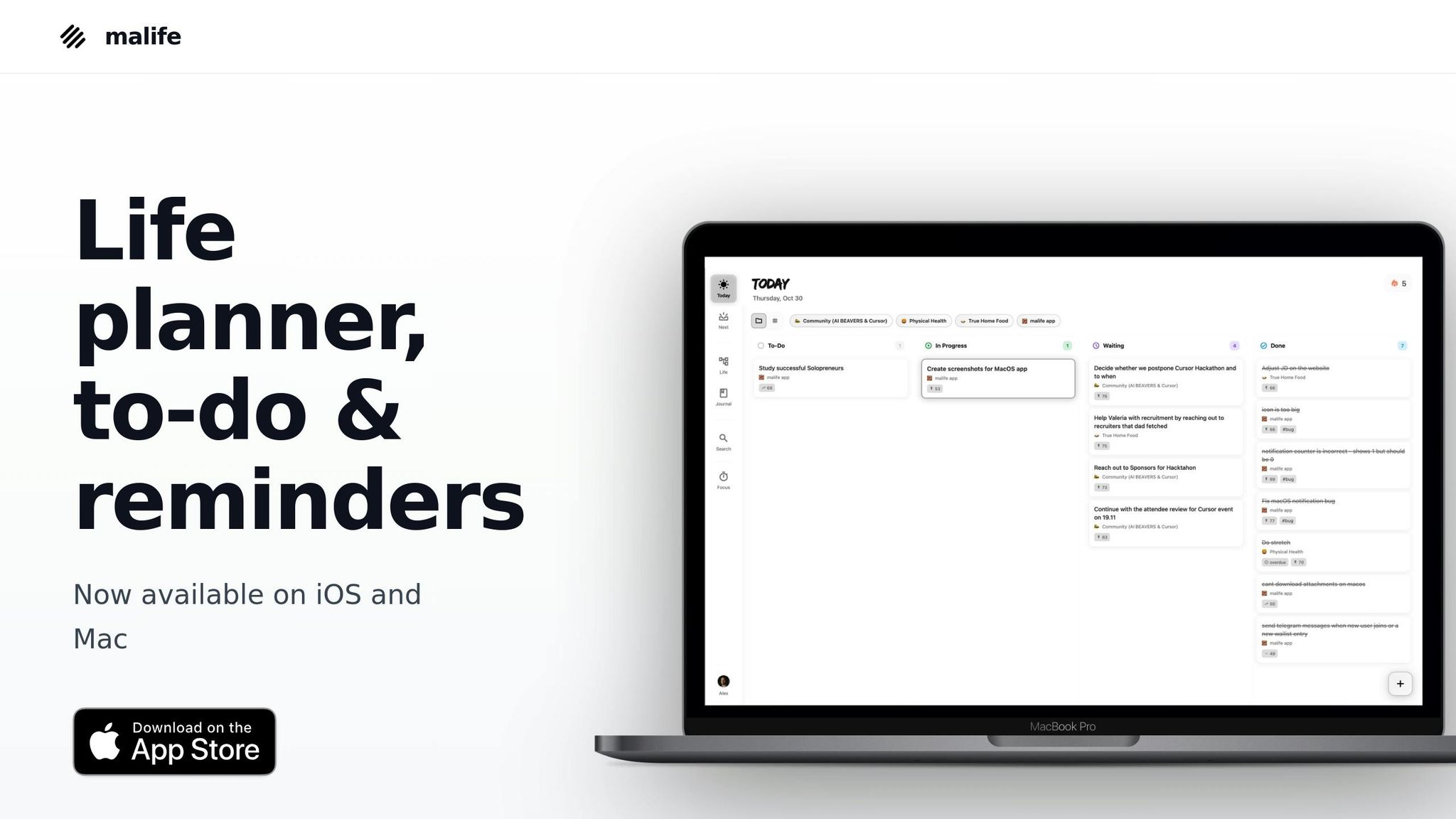
Burnout often stems from unclear priorities rather than the sheer volume of work. malife’s structured approach helps bring clarity by organizing your tasks into distinct categories.
- Life Areas allow you to separate work projects, personal goals, and family responsibilities, preventing the overwhelming mix of work and personal life.
- The Today & Next view highlights what needs your attention now and what’s coming up, helping you avoid the constant reactive state that drains energy.
- The Impact/Effort priority feature focuses your attention on tasks that truly make a difference - especially important since productivity tends to drop after working 50 hours per week.
Add Focus and Reflection Tools
Distractions can derail your day. Research shows it takes about 23 minutes to regain focus after an interruption. malife’s Focus Timer helps you carve out distraction-free time blocks, whether you prefer 25-minute Pomodoro sessions or the 52-17 work-rest cycle. Staying focused not only boosts productivity but also ensures your work doesn’t spill into personal time.
At the end of the day, use the Journal feature to reflect on your accomplishments and map out the next day’s priorities. For quick task management, the Voice Capture tool lets you record ideas or to-dos as they come to mind - like remembering to schedule a dentist appointment - without disrupting your workflow.
While organizing tasks and staying focused is essential, maintaining social connections and wellness habits is just as important.
Build Social Connections and Wellness Habits
Remote work doesn’t have to feel isolating. Make an effort to stay connected - schedule virtual coffee chats with coworkers or try walking meetings, where you combine a phone call with a brisk walk outside.
Reclaim the time you used to spend commuting and invest it in wellness activities. Whether it’s exercising in the morning, meditating, or enjoying a quiet cup of coffee, these rituals can replace the natural transitions that commuting once provided.
You might also create a personal Wellness Action Plan to identify what keeps you energized, recognize stress triggers, and determine the support you need. To break the monotony of working from home, explore "third spaces" like a local café, library, or co-working space. These small adjustments can make a big difference in maintaining your balance.
Before and After: The Impact of These Adjustments
Making intentional changes can completely shift the remote work experience from overwhelming to manageable. Without clear boundaries, remote workers often end up logging an extra 3.13 hours per day, and productivity takes a nosedive after 50 hours of work per week. But when structured habits are introduced - like setting routines and using tools such as Malife to map out commitments - task completion rates improve by 25%. Features like Life Areas help workers separate their professional and personal responsibilities, while the Impact/Effort priority system ensures focus on meaningful tasks instead of just staying busy. And let’s not forget the time saved: skipping the daily commute has reclaimed millions of workdays since the pandemic began.
The health perks are just as compelling. Employees with better balance take fewer sick days and see a boost in overall productivity. Chronic stress - which can double the risk of heart attacks - is reduced when workers adopt shutdown rituals and guard their personal time. Even family dynamics improve: 31% of employed adults say work interferes with family life, but setting clear boundaries can help ease that tension.
"Achieving a healthy work/life balance is an attainable goal... When workers are balanced and happy, they are more productive, take fewer sick days, and are more likely to stay in their jobs." - Mental Health America
Conclusion
Remote work doesn’t have to lead to burnout or blurred lines between personal and professional life. The key lies in making intentional adjustments - like carving out a dedicated workspace, setting clear work hours, and creating end-of-day rituals to signal the close of your workday. These aren’t just optional tweaks; they’re critical for maintaining both productivity and well-being while working from home.
Without boundaries, remote workers are logging an average of 3.13 extra hours every day, and a staggering 88% report experiencing burnout. However, by building structured habits - such as using malife to organize your tasks and prioritize using Impact/Effort scoring - you can establish a system that keeps work commitments in check and ensures your energy is spent on tasks that truly matter.
The numbers make a clear case: effective habits need to be paired with the right mindset. As David Allen points out, most stress stems from mismanaged commitments. That’s why tools like malife’s Today & Next flow are so valuable - they help you avoid overwhelming to-do lists and cut through mental clutter, making it easier to focus on what’s important.
The goal here isn’t to achieve perfection but to create a system that works for you over the long haul. Whether you’re someone who thrives on fluidly shifting between tasks or someone who needs strict boundaries to focus, the secret is finding your rhythm and sticking to it. Even small changes - like a five-minute shutdown routine at the end of your day or blocking off time on your calendar for deep focus - can lead to significant improvements in how you work and live.
Remote work offers incredible perks, like saving 89 million hours each week by eliminating commutes, but these benefits only shine when you take control of your schedule and protect your energy. The strategies outlined throughout this article underscore one crucial point: clear boundaries are essential for balancing productivity and personal well-being. By embracing small, intentional changes, you can make remote work a sustainable and rewarding part of your life.
FAQs
How can I maintain a healthy work-life balance while working remotely?
Maintaining a healthy work-life balance while working remotely begins with setting clear boundaries. Start by defining your work hours and letting both your team and family know about them. This helps manage expectations and ensures everyone respects your schedule. If possible, carve out a dedicated workspace - even if it’s just a corner of a room - to create a mental divide between your job and personal life.
Adding small rituals to your day can also help. For instance, kick off your morning by reviewing a planner or wind down in the evening by powering down work devices. Tools like malife can be a lifesaver, helping you prioritize tasks, set reminders, and safeguard personal time. Take a moment every now and then to reassess your boundaries, tweaking them as needed to maintain both productivity and well-being.
How can remote workers stay connected and avoid feeling isolated?
Staying connected as a remote worker often requires a bit of planning and effort. Start by carving out intentional moments for interaction. For example, you can schedule regular virtual check-ins, like weekly coffee chats or casual team calls, to help build personal connections and combat loneliness. Partnering with a buddy or mentor can also provide valuable one-on-one support, while team rituals - such as daily stand-ups or themed celebrations - can foster a stronger sense of community.
To keep things light and engaging, create spaces for informal communication. Dedicated chat channels for hobbies or quick, friendly check-ins can go a long way in making remote work feel less isolating. Leaders play a crucial role here - they can set the tone by encouraging openness and acknowledging the emotional challenges that come with remote work. On a personal level, simple mindfulness practices like breathing exercises or journaling can help you manage the mental strain that sometimes accompanies working from home.
For an extra boost, consider using a life-planning app like malife. Its “Today & Next” view and recurring reminders make it easier to plan social breaks, prioritize meaningful interactions, and weave connection into your daily routine.
How can tools like malife enhance productivity and balance for remote workers?
Digital tools have become essential for remote workers striving to stay organized, focused, and balanced. Without the structure of a traditional office, it’s easy to feel overwhelmed or lose sight of priorities. That’s where tools like malife come into play, offering much-needed clarity and structure to manage tasks, set priorities, and separate work from personal life.
malife makes remote work more manageable with features designed to streamline productivity. Its Life Areas feature provides a clear snapshot of personal and professional priorities, while Today & Next helps users focus on immediate tasks instead of getting bogged down by endless backlogs. The Impact vs. Effort matrix ensures that the most valuable tasks take precedence, and tools like voice capture and persistent reminders make sure nothing important is overlooked. To top it off, built-in focus timers and recurring task options help remote professionals maintain productivity without risking burnout.
By turning chaotic to-do lists into an organized, actionable system, malife enables remote workers to accomplish more while keeping their work-life balance intact.