
How Mindful Journaling Reduces Stress

How Mindful Journaling Reduces Stress
Mindful journaling is a simple yet effective way to manage stress. By writing down your thoughts and emotions with focused attention, you can process feelings, identify triggers, and reduce mental chaos. Research shows that this practice lowers cortisol levels, shifts brain activity to rational thinking, and even improves physical health, like lowering blood pressure and enhancing sleep quality.
Key Benefits:
- Helps name and process emotions, reducing their intensity.
- Lowers stress hormone levels (cortisol) and calms the "fight or flight" response.
- Improves focus, working memory, and emotional clarity.
- Identifies patterns in stress triggers and promotes better decision-making.
- Supports physical health, including faster healing and better sleep.
How to Start:
- Set a routine: Dedicate 5–10 minutes daily in a quiet space.
- Write freely: Focus on your thoughts without judgment.
- Reflect: Spot patterns and end with a gratitude list.
- Stay consistent: Tie journaling to daily habits like morning coffee.
Mindful journaling can be your go-to tool for reducing stress and gaining clarity in just a few minutes a day.
The Science Behind Mindful Journaling and Stress Reduction
Research-Backed Benefits of Mindful Journaling for Stress Reduction
How Journaling Affects the Brain
When you write about stress, it triggers fascinating changes in your brain. Journaling increases activity in the prefrontal cortex, the area responsible for language, reasoning, and problem-solving, while calming the amygdala, the part of the brain that sounds the emotional alarm during stress. This shift helps transform knee-jerk reactions into more thoughtful responses.
Putting your emotions into words on paper can also untangle mental knots. As Siri Myhrom from Mindful.org explains:
"By reducing the stressful load of un-dealt-with emotions, we're freeing up mental space."
This mental clarity improves your working memory, making it easier to focus and think clearly. Beyond mental benefits, journaling activates the parasympathetic nervous system - your body's "rest and digest" mode - which counteracts the stress-driven "fight or flight" response. This activation helps regulate breathing and blood pressure, creating a sense of physical calm. These brain and body changes form the foundation of the measurable benefits explored below.
Research-Backed Benefits
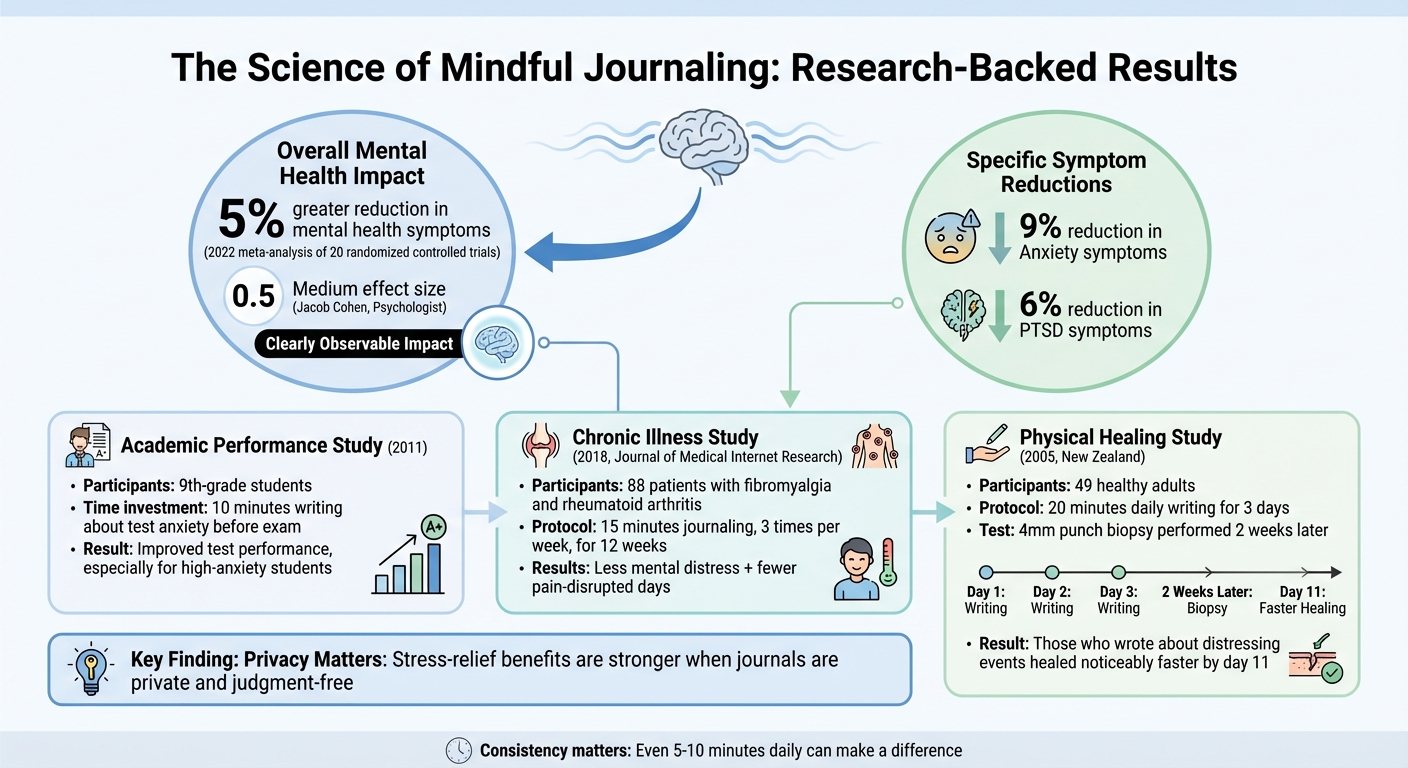
A 2022 meta-analysis of 20 randomized controlled trials revealed that journaling led to a 5% greater reduction in mental health symptoms compared to those who didn’t journal. Psychologist Jacob Cohen described the impact, noting that "a medium effect of 0.5 is clearly observable". In other words, the difference is both real and noticeable.
The benefits are even more striking for specific issues. For instance, journaling reduced anxiety symptoms by 9% and PTSD symptoms by 6%. In November 2020, Michigan State University Extension highlighted a 2011 study where 9th-grade students spent just 10 minutes writing about their test anxiety before an exam. The result? Those students outperformed their peers, particularly those who typically struggled with high anxiety.
Another example comes from a 2018 study in the Journal of Medical Internet Research. It followed 88 patients with chronic illnesses like fibromyalgia and rheumatoid arthritis. These participants journaled for 15 minutes, three times a week, over 12 weeks. The result? They experienced less mental distress and fewer days disrupted by pain.
Privacy plays a key role in journaling’s effectiveness. Research shows that when people know their journals are private and free from judgment, the stress-relief benefits become even stronger.
Main Benefits of Mindful Journaling
Better Emotional Control and Clarity
Putting your worries into words helps you identify and manage emotions, which can lessen their grip on you. Writing forces your mind to slow down and tackle one thought at a time, preventing mental chaos and even helping to regulate your breathing. This process creates some much-needed distance from stressful situations, making it easier to stop replaying negative scenarios in your head. With this emotional clarity, you can start to notice recurring stress triggers in your daily life.
Identifying Stress Patterns
Journaling regularly is like holding up a mirror to your habits, revealing patterns you might otherwise overlook. For instance, you might realize that skipping lunch on hectic days leaves you drained by evening. Or perhaps you’ll notice that little things - like rushing through your morning or constantly checking notifications - cause subtle but frequent spikes in your stress levels.
Dave Johnson, PhD, CNS-BC, LMFT at Parkview Health, highlights the value of spotting these patterns:
"Cultivating healthy patterns such as healthy eating, physical fitness and mindfulness requires a re-patterning of behavior so it becomes a way of being."
By paying attention to physical cues like tension in your jaw, chest, or neck, you can become more attuned to your body's stress signals. This awareness allows you to step in before stress takes over. Instead of reacting impulsively, you can make thoughtful decisions. Beyond mental clarity, journaling can also lead to noticeable physical improvements.
Physical Health Benefits
Journaling has been shown to lower blood pressure, regulate heart rate, and reduce cortisol levels - the hormone responsible for stress. Lower cortisol levels can help reduce inflammation, which is linked to conditions like asthma and rheumatoid arthritis.
A striking example comes from a 2005 study in New Zealand. Forty-nine healthy adults wrote for 20 minutes a day over three days, either about distressing events or neutral topics. Two weeks later, researchers performed a 4mm punch biopsy on their arms. Those who wrote about upsetting events healed noticeably faster by the 11th day compared to the control group. Similarly, women with advanced breast cancer who practiced expressive writing reported fewer physical symptoms and required fewer medical visits related to their condition.
Journaling can also improve your sleep. Writing before bed helps quiet the mental noise and racing thoughts that often disrupt rest. By processing lingering emotions, you free up mental energy, which not only aids sleep but also boosts working memory and sharpens your thinking throughout the day.
How to Start Mindful Journaling
Step 1: Create a Dedicated Journaling Space
Find a quiet place where you can write without interruptions. It could be your bedside table, a cozy kitchen corner, or even a park bench during your lunch break. The key is consistency - set aside 10–15 minutes daily, or even just 5 minutes if you're short on time. Use a timer to create a focused moment for writing without feeling rushed. Keep your journal within reach, like on your nightstand or in your bag, so you can jot down thoughts whenever inspiration strikes. To make it part of your routine, place it near something you already do daily - next to your coffee maker for morning reflections or on your nightstand for winding down at night. Writing by hand can be especially calming, helping you disconnect from screens and slow your pace, almost like a mini meditation in itself.
Once your space is ready, turn your attention inward and start observing your thoughts.
Step 2: Practice Non-Judgmental Observation
Begin your journaling session with a few deep breaths or a brief 5–10 minute meditation to settle your mind. Then, simply notice what comes up - your thoughts, emotions, or even physical sensations - without labeling them as "good" or "bad."
As Zindel Segal, a Distinguished Professor of Psychology at the University of Toronto, explains:
"The very act of writing takes information, that is often only dimly perceived, such as quick judgments, fears, worries, and concretizes by putting them in written form on paper."
Let any self-critical thoughts pass without clinging to them. If you’re unsure where to start, try grounding yourself by describing your current sensory experiences - what you see, hear, feel, smell, or taste. Don’t worry about perfection; this is your space to capture thoughts freely. Leave doodles or mistakes as they are - there’s no need to erase or correct them.
Step 3: Write Freely and Reflect
Use stream-of-consciousness writing to let your thoughts flow onto the page. Write continuously for 5 to 10 minutes, even if it feels disorganized or messy. If you’re stuck, begin with something simple like, "Here’s what I feel now...".
Once you’ve cleared your mind, take a moment to reflect. Ask yourself why certain events or feelings stood out to uncover potential emotional triggers. This reflection not only helps you process your emotions but also sheds light on hidden stressors. Wrap up your session on a positive note by listing three small things you’re grateful for today. Ending with gratitude helps shift your focus to clarity and positivity rather than lingering on stress.
Step 4: Make It a Daily Habit
The magic of journaling lies in consistency, not perfection. Even journaling once a week can boost your mental health, but doing it daily strengthens your emotional awareness and stress management. Connect journaling to a daily habit, like sipping your morning coffee, and set reminders to help you stick with it. Start small - write a single word, sentence, or question to keep the practice alive. Over time, this habit will feel as natural as brushing your teeth. And if you miss a day? Don’t sweat it - just pick it back up the next day. The focus is on progress, not perfection.
Using malife for Mindful Journaling

The malife Journal Feature
malife brings mindful journaling into your productivity routine by offering a simple, uncluttered space to capture your thoughts and reflections. This journal lives alongside your tasks and life areas, making it easy to check in with yourself whenever stress creeps in. The interface is designed to be distraction-free, so you can focus on writing without worrying about formatting. Whether it’s a quick note during a hectic workday or a longer reflection at the end of the day, everything stays in one place.
This feature provides a quick outlet for releasing tension during stressful moments.
Tracking Stress Across Life Areas
malife takes journaling a step further by letting you organize your entries by life area. Its Life Areas feature gives you a clear breakdown of your different responsibilities and goals, helping you identify where stress might be coming from. You can separate entries into categories like Career, Health, Relationships, and Personal Growth, making it easier to spot patterns in your reflections. For example, you might notice recurring stress tied to work deadlines or personal projects. This structured approach offers clarity that traditional chronological journaling might not, helping you focus on what truly needs your attention.
Staying Consistent with Reminders
Building a consistent journaling habit isn’t always easy, but malife’s reminders keep you on track without adding pressure. You can set a daily reminder that fits your schedule - whether it’s during your morning coffee at 7:00 AM or right before bed at 9:00 PM. If your day shifts, quick options like +10 minutes, +1 hour, or +1 day make rescheduling simple. The Focus Timer feature provides a dedicated 5–10 minute window for distraction-free journaling, helping you stay present and complete your daily practice. These tools make it easier to weave mindful journaling into your everyday life.
Conclusion
Mindful journaling can be a powerful way to manage stress. By shifting brain activity from the reactive amygdala to the calmer prefrontal cortex, it helps you process emotions rather than feel overwhelmed by them.
Studies show that spending just 15 minutes writing, three times a week, can significantly reduce distress and build resilience in as little as 12 weeks. Beyond emotional benefits, journaling also reduces intrusive thoughts, enhances working memory, and even lowers blood pressure.
Getting started is simple. Dedicate 5–10 minutes a day to write freely, without worrying about judgment or perfection. To make it stick, tie the habit to something you already do - like sipping your morning coffee or shutting down your laptop at day's end. The focus should be on consistency, not polished prose. The right tools can make this practice even easier to maintain.
malife helps integrate journaling seamlessly into your daily routine. Its Journal feature provides a dedicated space for your reflections, while Life Areas allow you to identify stress patterns across different aspects of your life, such as work, health, and relationships. With persistent reminders and a Focus Timer, malife ensures journaling becomes a regular, stress-free part of your day.
The aim isn’t to erase stress completely - it’s to handle it more effectively. Putting your worries into words can loosen their grip on your mind. Start today, and you’ll thank yourself later.
FAQs
How does mindful journaling help reduce stress hormones like cortisol?
Mindful journaling can actively help reduce cortisol levels, the hormone linked to stress, by giving you a way to process emotions and handle stress more effectively. When practiced regularly, journaling encourages self-reflection and builds awareness, which can soothe the mind and improve how you manage emotions. In fact, studies suggest that sticking with this habit can lower cortisol levels by as much as 19% in just one month.
By setting aside time to write down your thoughts and feelings, journaling creates a sense of clarity and emotional stability, allowing you to feel more in control of your stress.
How can mindful journaling help identify stress triggers?
Mindful journaling offers a powerful way to spot patterns in your thoughts, feelings, and actions that might be fueling your stress. By consistently jotting down your experiences, you can begin to see recurring triggers - like tight work deadlines, conflicts in relationships, or ongoing health worries. It also sheds light on the emotions tied to these situations, such as frustration, anxiety, or feeling overwhelmed.
This habit promotes self-awareness, helping you recognize behaviors like procrastination or avoidance that can make stress even harder to handle. Once you identify these patterns, you’re better equipped to understand your stressors and take meaningful steps to manage them, creating a stronger sense of balance and control in your daily life.
How can I build a daily habit of mindful journaling?
To make mindful journaling a daily habit, carve out a specific time each day - whether it’s first thing in the morning or right before bed - so it naturally fits into your routine. Keep your journal somewhere accessible, like on your nightstand or desk, to make starting as easy as possible.
When you sit down to write, let go of any self-judgment. Write about anything on your mind - your thoughts, feelings, or even small things you’re grateful for. If you’re feeling stuck, try using prompts or guided exercises to spark inspiration and keep the process fresh. Begin with just a few minutes a day, and over time, this small effort can grow into a meaningful ritual that nurtures your emotional health.