
How Mindful Eating Reduces Stress

How Mindful Eating Reduces Stress
Mindful eating can help you manage stress by focusing on your food and body cues during meals. This practice involves eating slowly, savoring flavors, and recognizing hunger and fullness signals. Research shows it can lower cortisol levels, improve digestion, and reduce emotional eating, all of which contribute to better mental and physical health. Here's how it works:
- Stress Relief: Mindful eating activates the "rest-and-digest" state, improving digestion and reducing stress-related discomfort.
- Better Choices: It helps distinguish between physical hunger and emotional triggers, reducing overeating.
- Improved Digestion: Eating slowly allows better nutrient absorption, stabilizing energy levels.
- Simple Steps: Start with distraction-free meals, chew thoroughly, and check in with your hunger cues.
This approach is easy to incorporate into daily life and supports a calmer, healthier relationship with food.
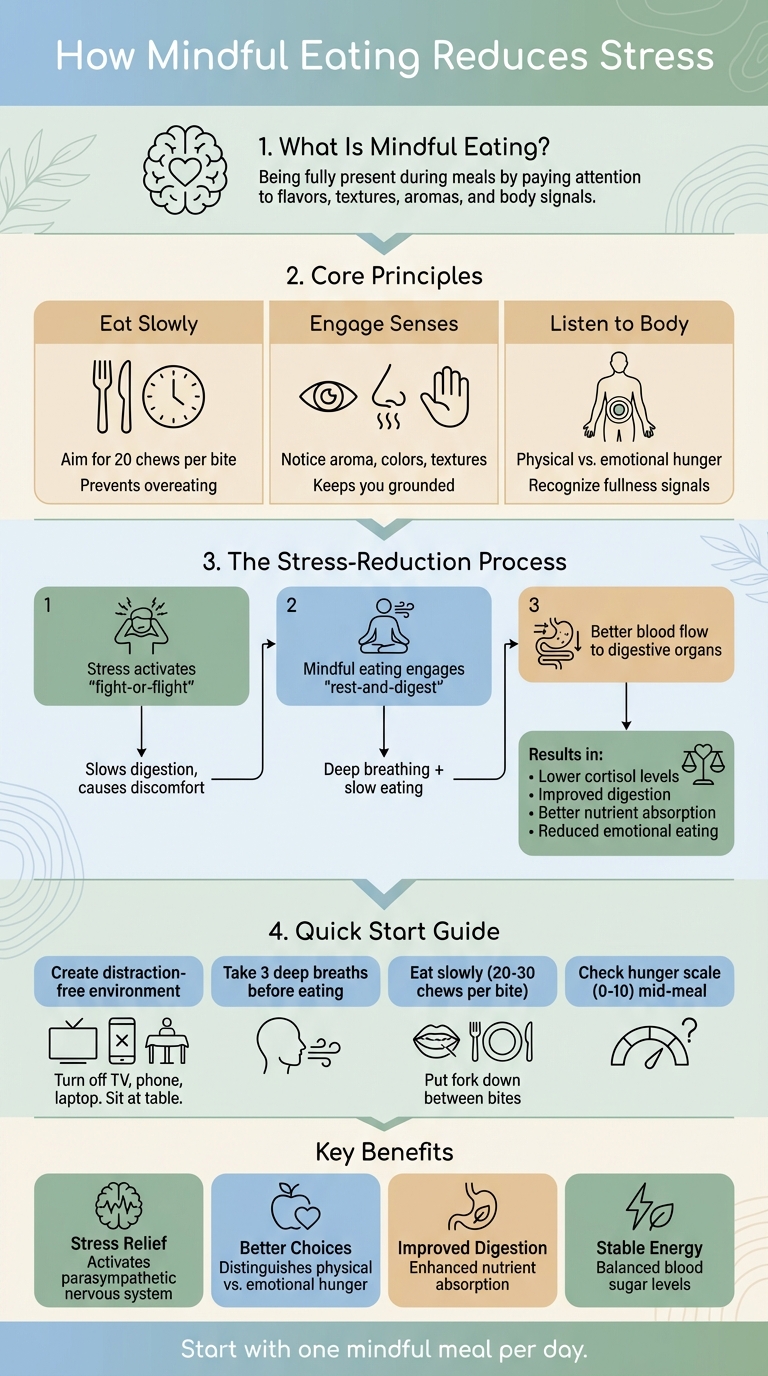
How Mindful Eating Reduces Stress: A Step-by-Step Guide
What Is Mindful Eating?
Mindful eating is all about being fully present during your meals. It’s about paying attention to the flavors, textures, and aromas of your food while tuning in to your body’s hunger and fullness signals. This approach shifts eating from being an automatic habit to a more intentional activity. For instance, instead of mindlessly munching on a snack, you notice the crunch of a chip, the saltiness of each bite, and recognize when you’ve had enough. It’s not just about the physical sensations - like the warmth of soup or the crispness of an apple - but also about becoming aware of the emotions tied to your eating habits.
Rooted in meditation practices, mindful eating encourages non-judgmental awareness. It’s not about strict rules or diets but rather about cultivating self-compassion and promoting well-being.
Core Principles of Mindful Eating
To better understand mindful eating, let’s explore its key principles:
- Eat slowly and savor each bite. Aim for about 20 chews per bite to give your body time to register fullness and prevent overeating.
- Engage all your senses. Notice the aroma before taking your first bite, admire the colors and presentation of your food, feel the texture as you chew, listen to the subtle sounds of your meal, and enjoy the layers of flavor. This sensory involvement keeps you grounded in the moment.
- Listen to your body. Before eating, ask yourself if your hunger is physical or driven by emotions like stress or boredom. Research reviewing over 68 studies highlights how mindful eating can improve eating habits by slowing down meal pace, enhancing awareness of fullness, and encouraging better control over eating behaviors.
This increased awareness can also help reduce emotional eating. By recognizing whether your urge to eat stems from genuine hunger or an emotional trigger, you can make more thoughtful choices - like taking a short walk or practicing deep breathing - rather than automatically reaching for comfort foods.
Applying Mindful Eating in Daily Life
Incorporating mindful eating into your daily routine doesn’t have to be complicated. Start small and build from there.
Begin with one distraction-free meal each day. Sit at a table, leave your phone in another room, and focus entirely on your food. Even a simple snack can become an opportunity to practice mindfulness. For example, plate your snack instead of eating straight from the package, and take a moment to observe its texture and taste. This small step can help you become more aware and reduce stress-driven eating.
At breakfast, try a simple routine: pause to take in the aroma of your food, chew each bite thoroughly (aiming for about 20 chews per bite), and check in with your hunger level before and after eating. For lunch, step away from screens, eat slowly, and notice when you start to feel satisfied - often before you’ve cleared your plate.
You can also try the "pause plate" method for snacks. Instead of eating directly from a bag or container, portion your food onto a plate. This visual cue naturally encourages you to slow down and pause between bites, giving your body time to signal when it’s full.
When challenges arise - like eating too quickly or feeling distracted - pair your mindful eating practice with deep breathing. Taking three deep breaths before starting a meal can help you shift into a calmer state. Using a timer to pace your meal (aim for at least 20 minutes) can also help you eat more deliberately. These techniques not only support mindful eating but also help reduce stress.
How Mindful Eating Reduces Stress
When you're stressed, your body activates the sympathetic nervous system, often called the "fight-or-flight" response. This diverts blood away from digestion, slowing the process and sometimes causing discomfort like abdominal pain, bloating, or irregular bowel movements. These issues can compound if stress becomes chronic, further straining your digestive system.
Mindful eating helps counteract this by engaging the "rest-and-digest" response. By eating slowly and incorporating deep breathing, you encourage better blood flow to your digestive organs, supporting smoother digestion. This shift in how your body processes food can have a profound impact on both your physical and mental well-being.
How Stress Affects Digestion
Stress can wreak havoc on digestion. When stress hormones flood your system, they redirect blood and oxygen away from your stomach and intestines, weakening your digestive efficiency. Over time, chronic stress can disrupt the communication between your gut and brain, impacting your mood and overall health.
Mindful eating offers a practical way to combat this. Simple practices like sitting down for meals, taking a few calming breaths, and chewing thoroughly signal to your body that it's safe to relax. This not only helps digestion but also ensures your body is better prepared to absorb nutrients. By easing stress, mindful eating supports a more consistent and effective digestive process.
Better Nutrient Absorption and Energy
Mindful eating doesn’t just aid digestion; it also enhances how your body absorbs nutrients. Slowing down and chewing food thoroughly allows your digestive system to break down food more effectively, improving nutrient uptake. This can stabilize your blood sugar levels and provide more consistent energy throughout the day. With steady energy, you’re less likely to experience the irritability or fatigue that often comes with energy crashes.
Additionally, mindful eating may naturally guide you toward making healthier food choices. When you're more in tune with your body’s needs, you're more likely to select nutrient-dense options that keep your energy levels balanced and help you tackle daily challenges.
Recognizing Emotional Eating Patterns
Mindful eating also helps you distinguish between physical hunger and emotional triggers. It encourages you to pause and reflect, allowing you to identify whether you're eating to satisfy actual hunger or to cope with stress or emotions. Studies show that mindfulness practices can reduce binge and emotional eating by improving your awareness of internal cues and external stressors.
Common emotional eating triggers might include work pressures, family conflicts, or feelings of loneliness. Before reaching for food, take a moment to ask yourself questions like, "Am I physically hungry, or am I seeking comfort?" or "Did something stressful just happen?" This pause can help you break the cycle of stress-induced overeating and the guilt that often follows. Aligning your eating habits with your values can reduce stress, improve your mood, and lead to greater overall satisfaction in life.
How to Practice Mindful Eating
Setting Up for a Mindful Meal
The environment you eat in plays a big role in mindful eating. Start by sitting at a table rather than eating on the move - this helps promote better digestion. Keep the space clear and uncluttered, with just your meal, a glass of water, and a napkin in front of you.
Turn off the TV, shut your laptop, and silence your phone to eliminate distractions. These interruptions can keep you stressed and lead to mindless eating. Before you begin, take a few deep breaths - just 1 to 3 breaths can help calm your body and prepare you to focus on your meal. If you're new to mindful eating, start small. Try practicing with just one meal or snack a day, ideally during a time when you're not in a rush, like lunch or dinner.
Focusing on Your Senses While Eating
Once you're settled, shift your full attention to the food in front of you. Take a moment to notice the colors, shapes, and how everything is arranged on your plate. Breathe in the aromas and see if you can pick out specific scents like spices, herbs, or sweetness. Engaging with these sensory details helps you stay grounded in the moment.
Take small bites and chew slowly - some suggest aiming for 20 to 30 chews per bite. Pay attention to how the textures and flavors change as you chew. To naturally slow your pace, try putting your fork or spoon down between bites. This gives your brain time to catch up and recognize when you're starting to feel full. Midway through your meal, take a brief pause. Check in with yourself by rating your hunger and fullness on a scale from 0 to 10. This simple step can help you stop eating when you reach a comfortable level of fullness. Focusing on your senses like this can make mindful eating feel more natural over time.
Using Tools to Stay Consistent
Sticking to mindful eating can be easier with a little help. For example, using tools like malife's Focus Timer can keep you present during meals. Set it for 10 to 20 minutes - your planned mealtime - and let it guide the start and end of your practice. During this time, keep your phone face down and other distractions out of sight so you can give your full attention to your meal.
After you eat, consider using malife's Journal to jot down your hunger levels, emotions, distractions, and stress. Over time, this can help you notice patterns, like reaching for snacks after a stressful day at work. Recognizing these habits is the first step toward changing emotional eating behaviors.
To make mindful eating part of your daily routine, set up recurring reminders. For instance, schedule a weekday alert at 12:30 p.m. labeled "Mindful Lunch", or an evening reminder like "Check hunger before snacking." Use malife's Today & Next features to list small, actionable steps like "Take 3 mindful bites at dinner" or "Journal stress level after lunch." These simple reminders can help you build consistency and make mindful eating a natural part of your day.
Long-Term Benefits for Stress Management
Creating Lasting Habits
Mindful eating not only helps ease stress in the moment by improving digestion but also lays the groundwork for a calmer, more balanced stress response over time. Practicing mindful eating regularly encourages your body to shift into a more relaxed, restorative state. This practice can stimulate the parasympathetic nervous system - often called the "rest-and-digest" mode - helping to counteract chronic stress and reduce cortisol levels.
Studies have shown that mindful eating can significantly reduce both stress and emotional eating. By tuning in to your hunger, fullness, and emotional cues, you naturally start leaning toward nutrient-rich foods that fuel your body instead of depleting it. This heightened awareness can disrupt patterns of stress-induced eating, leading to steadier energy levels and an overall sense of well-being. Some experts even recommend keeping a handwritten journal to track stress levels, symptoms, and eating patterns. This practice encourages nonjudgmental self-awareness, which can help curb stress-related eating behaviors.
These foundational habits create a strong base for more structured mindful eating routines, as outlined below.
Planning Mindful Eating Sessions
To make the most of these benefits, scheduling mindful eating sessions can help you stay consistent. For instance, you can use tools like malife to integrate mindful eating into your daily routine. Add tasks to your Today & Next views, such as "Mindful lunch at 12:00 p.m." or "Practice 3 mindful bites at dinner."
Leverage malife's Persistent Reminders to reinforce the habit. For example, set a repeating reminder - like one at 11:50 a.m. on weekdays labeled "Prepare for mindful lunch" - with easy options to reschedule (+10m, +1h, +1d). You can also create Recurring Tasks under a Life Area like "Wellness" to track your progress. On busy days, use Voice Capture to quickly add tasks like "Mindful snack at 3 p.m. today", keeping you on track even when you're on the go.
Conclusion
Mindful eating offers a practical way to reduce stress, improve digestion, and build emotional strength. By slowing down and paying attention to your body's cues - like hunger, fullness, and the emotions tied to cravings - you engage your parasympathetic nervous system, shifting into a calmer "rest-and-digest" state. Over time, this approach can help lower cortisol levels, ease anxiety-driven eating, and enhance nutrient absorption. It's a small but meaningful step toward incorporating mindfulness into your daily meals.
You don’t need to make drastic changes all at once. Start small - choose one meal or snack each day to eat without distractions. Take your time, chew slowly, and focus on the flavors and textures of your food. These brief moments of awareness can disrupt automatic stress responses and encourage more thoughtful, nourishing choices.
Be patient and kind to yourself as you build these habits. Celebrate small wins, like savoring a few mindful bites or pausing during a tense moment instead of automatically reaching for comfort food. Each mindful decision strengthens your ability to manage stress and brings a sense of calm to your routine.
Whether you’re just starting out or deepening your practice, mindful eating can be a grounding tool for managing stress and nurturing yourself. By anchoring your eating habits in mindfulness, you create a foundation for balance and self-care that supports you from the inside out.
FAQs
How can I practice mindful eating when my schedule is so busy?
Start by carving out just a few minutes during meals or snacks to practice mindful eating. A tool like malife can help you stay on track - use its voice capture feature to set quick reminders, and let its persistent alerts nudge you gently. As you eat, focus on your senses: notice the flavors, textures, and aromas of your food. Take slow, deep breaths to keep yourself grounded in the moment. Over time, these small habits can effortlessly become part of your daily routine, no matter how packed your schedule is.
How can I tell if I’m eating because of stress instead of hunger?
Stress eating can manifest in several ways, such as eating too quickly without savoring your food, reaching for specific comfort foods like sugary treats or salty snacks, or eating even when you're not physically hungry. It might also leave you feeling guilty or regretful afterward. Often, food becomes a way to distract yourself or cope with emotions instead of tackling the actual source of your stress. Recognizing these patterns is a key step in understanding when stress, rather than genuine hunger, is influencing your eating habits.
Can mindful eating help reduce stress and support weight management?
Mindful eating offers benefits for both reducing stress and managing weight. By tuning into your body's natural hunger and fullness signals, it helps establish healthier eating patterns and minimizes the chances of turning to food for emotional comfort. Plus, practicing mindful eating can encourage relaxation and enhance digestion, which not only helps alleviate stress but also contributes to your overall health.