
How to Finish Tasks When Motivation Drops
How to Finish Tasks When Motivation Drops
When motivation runs low, getting things done can feel impossible. But you don’t have to rely on willpower alone. Here’s how you can push through those tough moments and stay productive:
- Start Small: Use the 5-minute rule - commit to just five minutes of work. Often, starting is the hardest part.
- Break Down Tasks: Divide overwhelming projects into smaller, actionable steps to make progress easier.
- Pair Tasks with Positives: Link tasks to enjoyable activities or habits you already have.
- Remove Barriers: Simplify tasks and reward yourself for progress, no matter how small.
- Optimize Your Environment: Create a distraction-free workspace and use accountability to stay on track.
These steps help you overcome procrastination, build momentum, and make consistent progress - even when motivation is low. Let’s dive into the details.
5-Step Process to Complete Tasks When Motivation Is Low
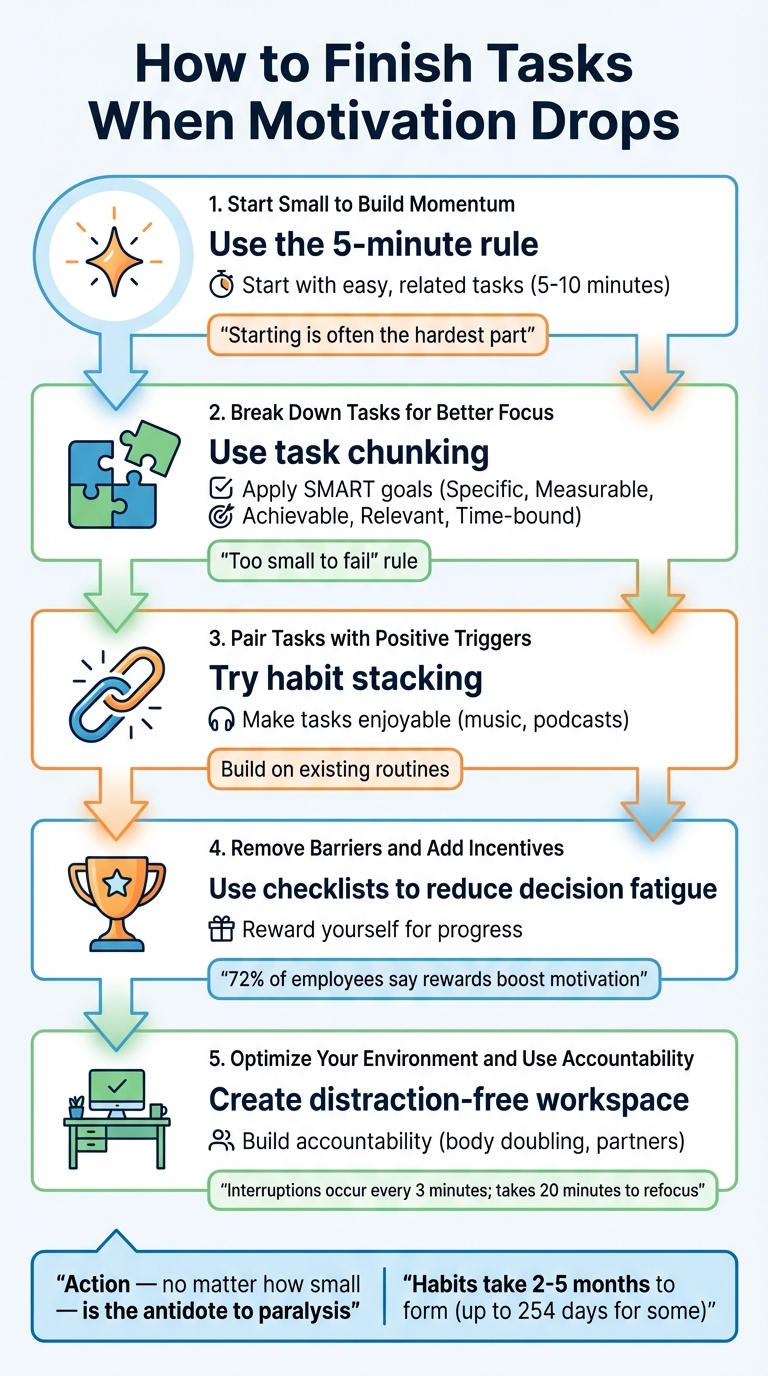
Step 1: Start Small to Build Momentum
Motivation doesn’t just appear out of nowhere - it often follows action. If you’re stuck in a low-energy rut, waiting for inspiration to magically show up isn’t going to help. Instead, take the first step, even if it’s small, to kickstart your momentum. Here’s a simple way to get started.
Try the 5-Minute Rule
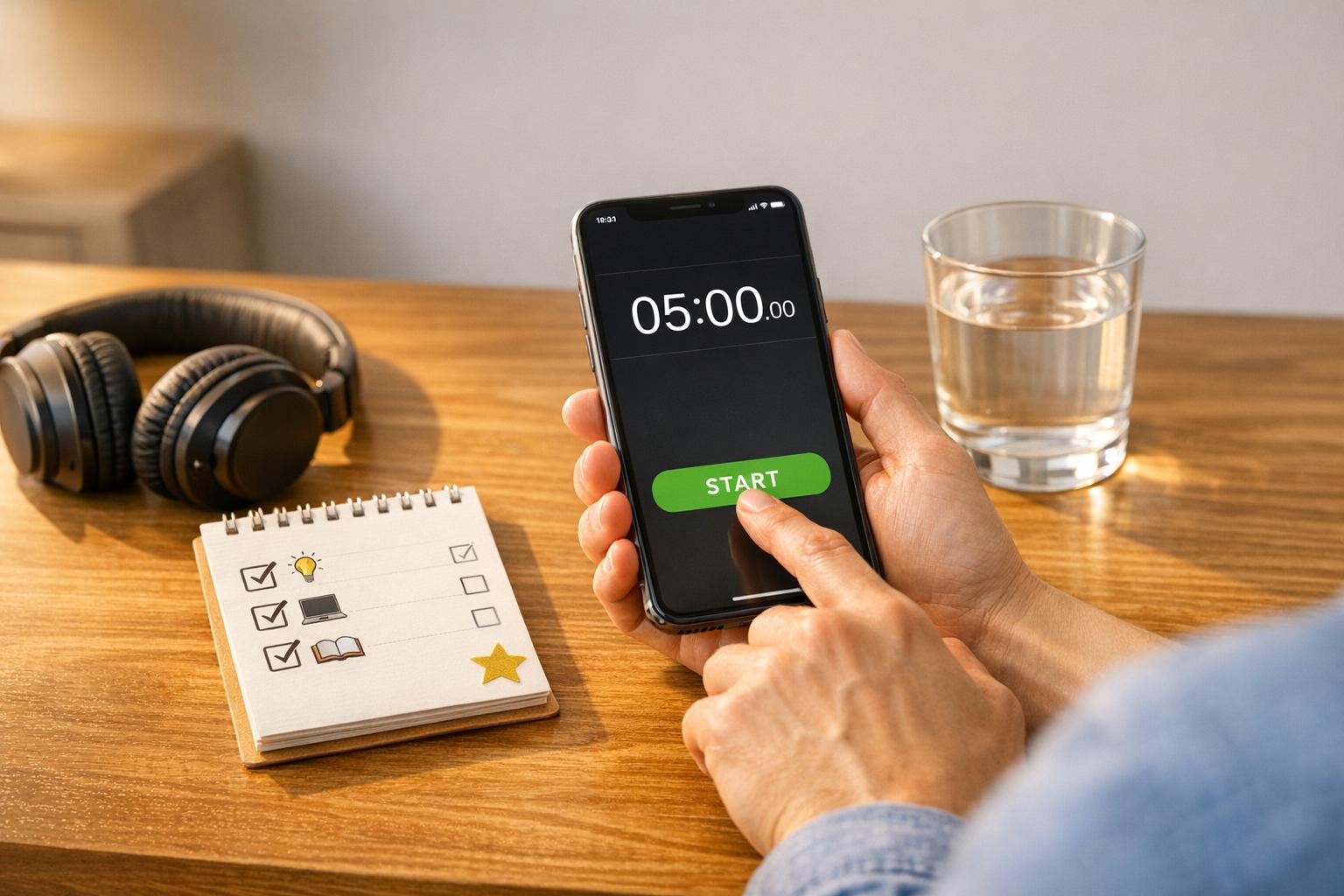
The 5-minute rule is as straightforward as it sounds: commit to working on a task for just five minutes. Set a timer, focus on the task, and see where it takes you. Most of the time, once you’ve started, you’ll naturally keep going. Starting is often the hardest part, and breaking through that initial resistance can get you into a productive rhythm.
"Cognitive Behavioral Therapy Los Angeles"
Why does this work? When you begin even a small task, your brain releases dopamine, which sparks a “success cascade” that builds momentum. Interestingly, your brain reacts to small wins - like starting a task - just as it does to completing a big project. Before diving in, minimize distractions: leave your phone in another room, block sites that derail your focus, or use noise-canceling headphones to create a distraction-free zone.
Start with Easy, Related Tasks
If even five minutes feels like too much, start with the simplest, related task you can think of. Spend 5–10 minutes on something small and manageable that ties into your bigger goal. For instance, you could tidy up your workspace, gather materials, or jot down a quick outline for your project. These small “warm-up” tasks not only get you moving but also activate your brain’s reward system, making it easier to transition into more challenging work.
"What's the most productive task that is within my capacity right now?" – Alice Boyes Ph.D., Psychology Today
Just don’t let these easier tasks take over. Spending more than 30 minutes on them can sap the energy you’ll need for the real work. Think of these actions as stepping stones: they help you overcome procrastination, reduce stress, and create a sense of unfinished business that nudges your brain to keep going.
Step 2: Break Down Tasks for Better Focus
Once you've built some momentum with smaller actions, it's time to sharpen your focus by breaking tasks into more manageable pieces. Big, undefined goals can feel overwhelming and lead to procrastination. The solution? Break tasks into smaller, actionable steps. This method lightens the mental load, creates clear checkpoints, and reduces the uncertainty that often leads to avoidance. By keeping tasks bite-sized, you can maintain steady progress.
Try Task Chunking for Simplicity
Task chunking involves breaking a large project into smaller, more manageable parts. Instead of tackling something broad like "write a report", you’d break it down into specific steps such as "gather data sources", "draft the introduction", or "design charts." This approach gives your brain clear milestones to aim for, making the process less daunting.
Start by outlining your project's overall goal, deadline, and deliverables. Then, divide it into key subtasks, using precise and actionable language (e.g., "schedule a team meeting to brainstorm Plan B"). Review each subtask to see if it can be simplified further. Also, account for dependencies - note any steps that require input or approval from others to avoid delays.
The "too small to fail" rule is especially helpful here. If a task still feels intimidating, make it even smaller. For example, instead of "go for a run", start with "put on running shoes" or "run for just five minutes."
Use SMART Goals to Stay on Track
Breaking tasks into chunks is great, but applying the SMART framework - Specific, Measurable, Achievable, Relevant, Time-bound - makes those chunks actionable. Vague goals like "publish a novel" can leave you unsure where to start, but a SMART goal breaks it into clear, achievable steps.
"SMART goals work because they close the gap between wanting to do something and actually doing it." – Calm Editorial Team
For instance, instead of saying, "I want to get healthier", a SMART goal would be: "Walk for 20 minutes every Monday, Wednesday, and Friday at 7:00 AM for the next four weeks." This level of detail tells you exactly what to do next, making it easier to take action. Completing these smaller, well-defined goals builds lasting confidence.
Organize Tasks with malife's Today & Next Views
Once you've broken tasks into clear steps and set SMART goals, organizing them effectively is the next step. malife's Today & Next views can help streamline this process: the Today view highlights your immediate priorities, while the Next view keeps track of upcoming actions.
Each morning, spend a few minutes tidying up your Today view. Identify your top three most important tasks (MITs) and move less urgent items to the Next view. This creates a practical daily plan that matches your actual capacity. If needed, shift tasks between Today and Next to stay focused. At the end of the day, reschedule any unfinished, non-urgent tasks to keep things fresh for tomorrow.
"If you do all your planning work in the morning, this would be a great time to clean up your Today view." – Sergio, Customer Success Specialist
This method helps you achieve "Today Zero" - ending the day with a completed task list, which can boost motivation and reduce stress. Since only about 2.5% of people can multitask effectively, focusing on one task at a time with these views is key to staying productive.
Step 3: Pair Tasks with Positive Triggers
Once you've broken tasks into smaller, manageable steps, the next move is to associate them with positive triggers. This helps tasks feel less like a chore and more like a natural part of your day. When motivation dips, linking tasks to routines or enjoyable activities can give you the push you need to get started. By tapping into habits you already have, you can sidestep the mental resistance that often leads to procrastination.
Try Habit Stacking
Habit stacking is all about connecting new tasks to habits you’ve already established. This way, you’re building on existing routines instead of relying on sheer willpower. For instance, if you already brew coffee every morning, you could make it a habit to review your top three tasks for the day right after pouring your cup. That simple addition turns a routine action into a trigger for productivity.
You can also use visual reminders, like placing a sticky note on your fridge to prompt meal planning or grocery shopping.
Make Tasks More Enjoyable
Pairing tasks with something you enjoy can transform how you perceive them. For example, you could listen to a favorite podcast or play some upbeat music while tackling mundane chores. The trick is to stay consistent - using the same enjoyable pairing each time strengthens the connection in your mind.
"By always pairing the same fun activity with the boring task, you reinforce the positive association in your mind. Over time, looking forward to the rewarding fun part can become enough that you have more positive feelings about the tedious task itself." – Jonathan H. Westover, PhD, HCI Academy
Another approach is to change how you view the task. Instead of seeing it as a dull chore, focus on one small aspect you genuinely like - maybe it’s the scent of freshly folded laundry or the satisfaction of checking off a completed item from your list. You can also create a more inviting environment by using a favorite mug, lighting a candle, or setting up a cozy workspace. These small changes can make the experience more pleasant and set the tone for a smoother workflow.
Use malife's Voice Capture and Recurring Tasks
malife's Voice Capture feature lets you quickly add tasks by speaking them aloud, with the app handling the details for you. This means you can jot down ideas or reminders as soon as they pop into your head, without disrupting your current focus.
For recurring tasks, malife makes life easier by automating their appearance in your Today or Next views. This way, routine commitments become habits without requiring constant mental effort to remember them. Organizing these recurring tasks within Life Areas helps you see them as part of a well-rounded life rather than just another item on your to-do list.
Step 4: Remove Barriers and Add Incentives
Make tasks easier to start and finish by clearing obstacles and introducing rewards. Our brains often shy away from tasks that seem unpleasant or uncertain, using procrastination as a way to escape feelings like self-doubt or overwhelm. By preparing in advance and setting up incentives, you can make the process smoother and more manageable, turning hesitation into action.
Break It Down with Checklists
A simple checklist can work wonders. Break your task into smaller, manageable steps to reduce decision fatigue. For instance, if you're working on a presentation, your checklist might include steps like gathering data, outlining key points, designing slides, writing speaker notes, and practicing. Visual aids, like sticky notes or sketches, can also serve as helpful reminders. A sticky note on your laptop saying "Review budget" or a weekly task checklist can gently nudge you back on track.
Reward Yourself for Progress
Every time you complete a task, your brain releases dopamine, which feels great. Pairing tasks with rewards makes this even more effective. For smaller tasks, try quick, immediate rewards like a five-minute break, a snack, or simply pausing to appreciate your effort. For bigger projects, plan something more meaningful - a nice dinner, a movie night, or an hour doing something you genuinely enjoy. Anticipating a reward can motivate you to begin, and following through reinforces that success feels good.
"Your brain doesn't distinguish between big and small achievements - it just knows success feels good." – Sarah Thompson, Ahead App
The science backs this up: 72% of employees say rewards boost their motivation, and 83% report improved productivity when incentives are involved. While these stats come from workplace settings, the same principles apply to personal goals. The trick is to celebrate your efforts, using rewards as a way to acknowledge progress rather than just as external motivators.
Stay on Track with malife's Tools
malife's Persistent Reminders ensure tasks stay visible until you acknowledge them. If you're busy when a reminder pops up, you can easily snooze it for +10 minutes, +1 hour, or +1 day with just one tap. Unlike standard notifications that are easy to dismiss, these reminders keep your priorities front and center.
The Life Areas feature offers an organized view of your commitments by categorizing tasks into areas like Work, Health, Relationships, Finances, and Personal Growth. This overview helps you spot imbalances early. For example, if your Health tasks are slipping while Work dominates your time, the visual cue can encourage you to redistribute your focus, helping you stay motivated without burning out.
Step 5: Optimize Your Environment and Use Accountability
Your workspace and sense of accountability can play a big role in boosting focus. When motivation dips, even minor distractions can throw you off track. On average, U.S. employees face interruptions nearly every 3 minutes, and it takes about 20 minutes to regain full focus after being distracted. By designing a distraction-free workspace and building accountability, you can stay on task and maintain your momentum.
Create a Workspace That Works for You
Start by carving out a dedicated space for work. This physical separation helps signal to your brain that it’s time to focus, making it easier to keep professional tasks distinct from personal life. If possible, position your desk in a quiet spot, away from high-traffic areas or windows where movement might pull your attention away. Facing away from busy areas can further limit interruptions.
Soundproofing is another key factor. Joan Blumenfeld, Interior Design Director at Perkins+Will, highlights this point:
"It's become much more important now to acoustically zone than to visually zone".
To minimize noise, try using noise-canceling headphones or adding soft furnishings like rugs and curtains to absorb sound. Digital distractions also need taming - tools like website blockers and Focus Mode can help you stay on track. For mental distractions, keep a notepad handy and use the "Parking Lot" method: jot down unrelated thoughts or tasks as they pop up so you can revisit them later without losing focus.
Build Accountability into Your Routine
Once your workspace is set, accountability can help you stick to your goals. One effective method is "body doubling", where you work alongside someone else, either in person or virtually. This shared focus creates a sense of responsibility and can make starting and sticking to tasks easier, even the challenging ones.
Another way to stay accountable is by sharing your goals with someone. Regular check-ins with an accountability partner can provide motivation, help you track progress, and address any roadblocks. If you don’t have an external partner, practice positive self-talk. Replacing negative thoughts like "I can't do this" with reminders of your strengths and past successes can make a big difference. As the Calm Editorial Team puts it:
"The way you talk to yourself can have a huge impact on your mindset, confidence, and overall motivation".
Accountability helps convert hesitation into action.
Track Your Progress with malife's Features
With your workspace and accountability strategies in place, tracking progress can help you stay on course. malife's Projects view is a great tool for breaking down big goals into smaller, manageable steps, reducing the overwhelm that often comes with tackling large tasks. Grouping related tasks under one project makes it easier to see your next steps clearly, leveraging the Zeigarnik Effect - a psychological principle where incomplete tasks create a mental nudge to finish them.
malife’s Journal feature is another way to stay motivated. Each evening, jot down three small wins from your day.
"Even a crumb looks enormous if you're an ant or feel like one" – Viv.
Recognizing small achievements builds momentum and a sense of pride. Sharon, a user quoted in mental health research, shares this advice:
"Take any opportunity to praise yourself and not focus on the things you haven't done but look at the things you have".
Over time, journaling can also reveal patterns of procrastination. By identifying tasks you frequently avoid, you can dig into the reasons behind the delay - whether it’s boredom, stress, or lack of clarity - and address them head-on.
Conclusion
When motivation takes a nosedive, taking action becomes your most dependable ally. Even small steps can break through mental resistance and ignite forward momentum. Grace Kuraska, Marketing Content Writer at Goodwin University, sums it up perfectly:
"Action - no matter how small - is the antidote to paralysis".
Once you start, keeping that momentum alive is just as important. Consistency outweighs perfection - missing a day doesn’t mean failure. What matters is showing up again and breaking the cycle of negative habits. Research debunks the myth of forming a habit in 21 days; it actually takes 2 to 5 months for habits to stick, and for some, it may take as long as 254 days. The takeaway? Imperfect, consistent action leads to long-term progress.
Momentum builds on itself, and small wins can snowball into bigger achievements. Whether it’s finishing a 5-minute task or checking something off your list, these little victories reinforce positive habits and make the next step feel less overwhelming. As Amy Morin, LCSW, Psychotherapist, and Author, wisely points out:
"Getting started on a task is usually the hardest part. Once you get going, however, it's much easier to keep going".
FAQs
What is the 5-minute rule, and how can it help you stay motivated?
The 5-minute rule is a straightforward approach to tackle procrastination and spark motivation. The concept is simple: dedicate just five minutes to a task. By setting such a short and manageable timeframe, it lowers the mental barrier to starting, and more often than not, that initial effort builds momentum to keep going.
This strategy shifts the focus from the overwhelming idea of completing a task to simply beginning it. By breaking work into smaller, less daunting steps, the 5-minute rule makes it easier to make progress and stay on track.
What are positive triggers, and how can they help with tasks?
Positive triggers are little cues or reminders that spark motivation and make it easier to dive into or complete tasks. They work by linking tasks to positive feelings or by reducing the initial effort needed to get started.
Take this for example: leaving your running shoes by the door can nudge you toward that morning jog. Or, placing an uplifting photo or quote at your desk can lift your mood and sharpen your focus. Another simple trick? Reward yourself with something small, like a favorite snack or a quick break, after finishing a task. This taps into your brain’s reward system, making the experience feel more enjoyable and encouraging.
By tying tasks to these positive triggers, you can build an environment that keeps you moving forward, even on days when motivation feels out of reach.
How can I use accountability to stay motivated and complete tasks?
Accountability is a great way to keep yourself motivated and on track. One simple step is to share your goals with someone you trust - whether that’s a friend, mentor, or colleague. Having someone check in on your progress and cheer you on creates a sense of responsibility, making it much harder to put things off.
Another helpful strategy is setting clear deadlines and regularly tracking your progress. Tools like malife, a life planner and to-do app, can make this easier by helping you organize your tasks, set reminders, and prioritize what matters most. When accountability becomes part of your routine, it’s easier to stay focused and follow through, even during those moments when motivation feels out of reach.