
7 Life Areas for Better Balance
7 Life Areas for Better Balance
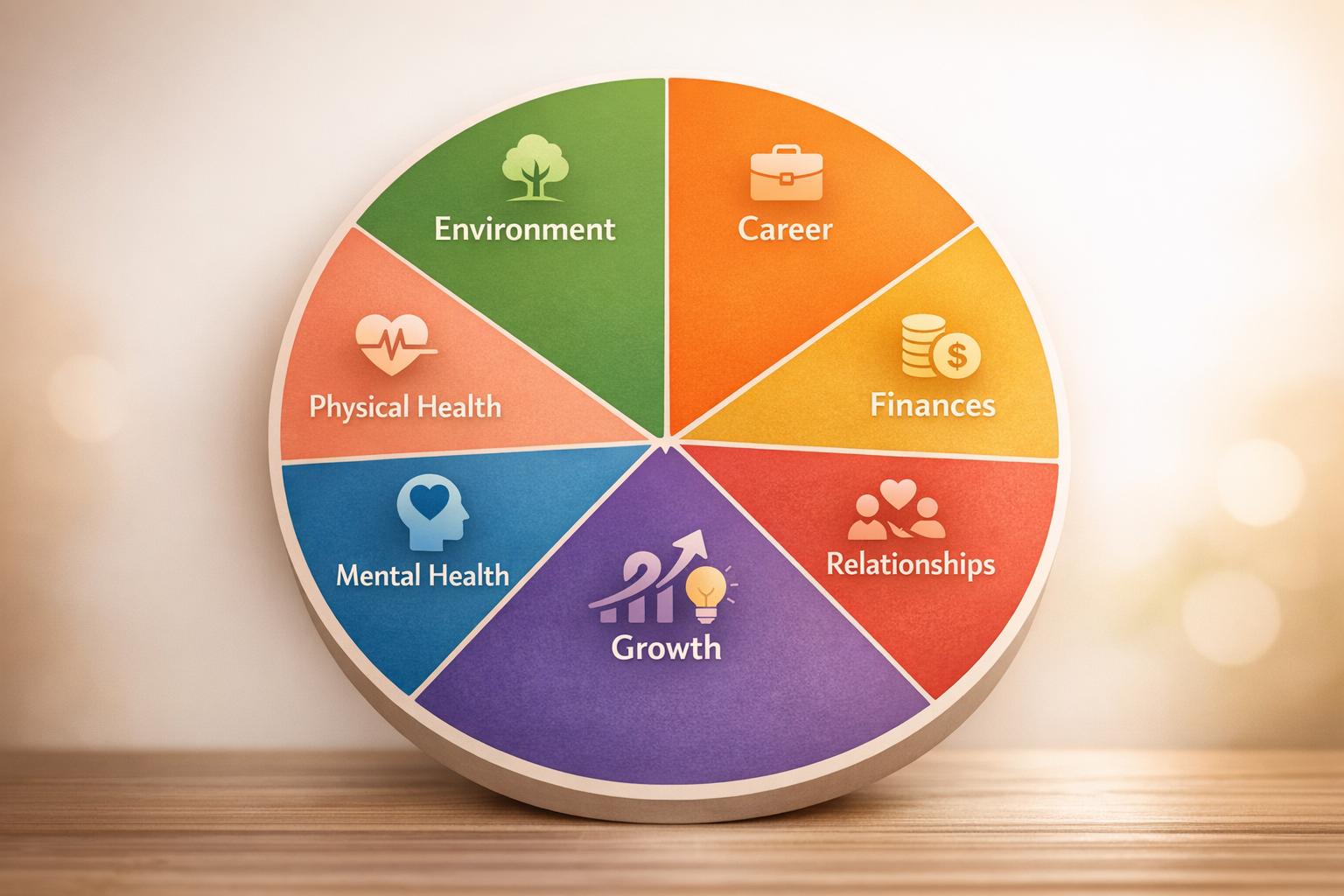
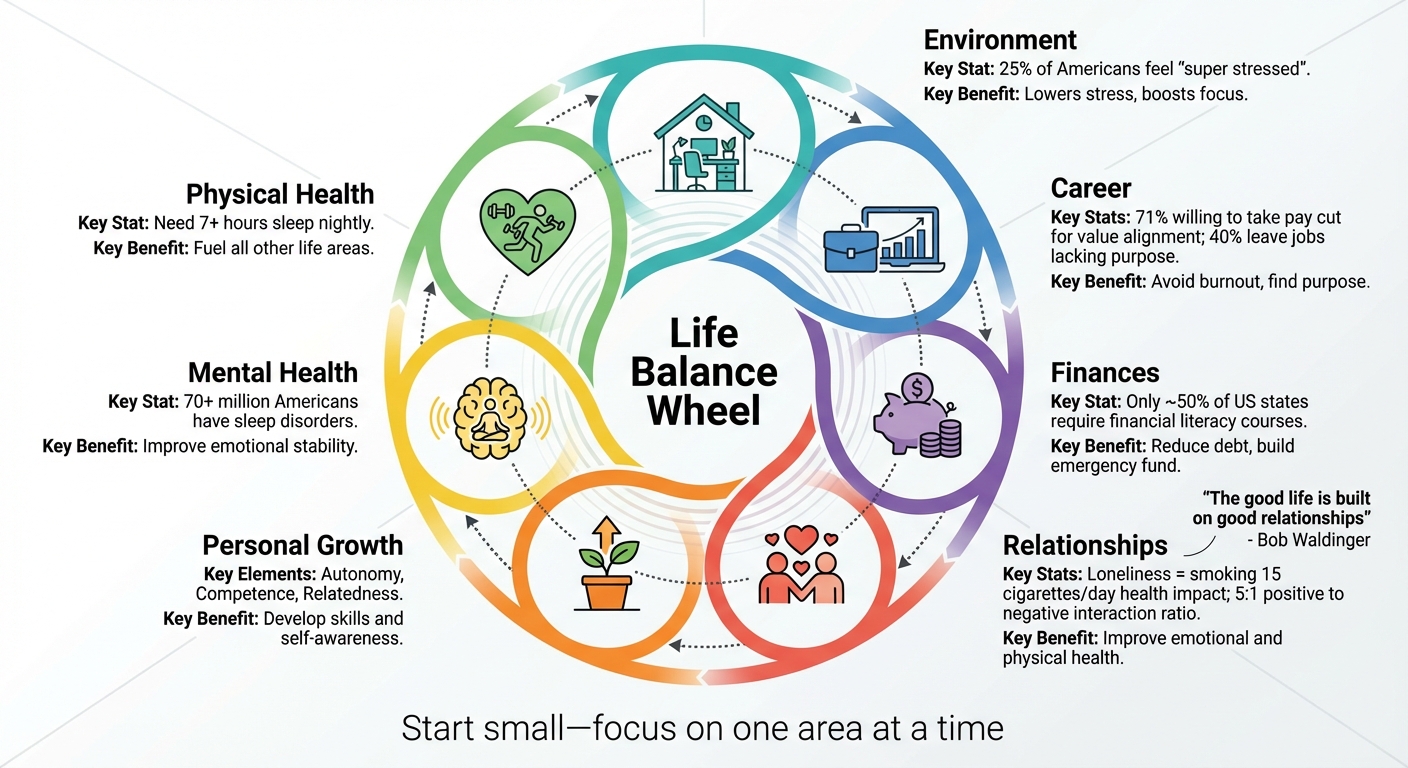
Life can feel overwhelming when everything blends together - work, health, finances, and relationships. The key to regaining control? Break life into seven areas: Environment, Career, Finances, Relationships, Personal Growth, Mental Health, and Physical Health. Each area impacts the others, so neglecting one can create a ripple effect. By focusing on small, consistent improvements, you can reduce stress, boost productivity, and build resilience. Here's a quick overview of these areas:
- Environment: A tidy, functional space lowers stress and boosts focus.
- Career: Align work with personal values to avoid burnout and find purpose.
- Finances: Track spending, reduce debt, and build an emergency fund.
- Relationships: Quality connections improve emotional and physical health.
- Personal Growth: Set goals to develop skills and self-awareness.
- Mental Health: Sleep, exercise, and mindfulness improve emotional stability.
- Physical Health: Balanced nutrition, movement, and rest fuel all other areas.
Start small - focus on one area at a time and track your progress. Tools like malife can help you organize tasks, prioritize goals, and maintain balance across these key areas.
7 Life Areas for Better Balance and Well-Being
1. Environment
Your physical environment - whether it’s your home, workspace, or local neighborhood - affects far more than just your surroundings. It plays a significant role in your stress levels, productivity, and overall well-being. A cluttered desk or a messy apartment isn’t just unpleasant to look at; it drains your mental energy and makes even simple tasks feel harder.
Here’s a startling fact: over 25% of Americans report feeling "super stressed", and chronic stress can double the risk of a heart attack. One major factor? A lack of control over your surroundings. Studies show that when people have more control over their living and working spaces, their stress levels drop significantly. When your environment feels chaotic, it often reflects in your mental state.
Andrew Mitchell, Founder of The Design Coach, sums it up perfectly:
"The quality of our spaces influences our physical, emotional, and spiritual well-being".
A well-organized, functional space isn’t a luxury - it’s a necessity. Clean air, natural light, and tidy surfaces create an environment that supports you rather than drains you.
Start small. Focus on one area at a time and sort items into categories: discard, relocate, donate, or file. Keep an empty drawer available for temporary overflow during busy weeks, and spend just five minutes a day tidying up your desk. These simple habits prevent clutter from piling up and stop your environment from becoming an ongoing source of stress.
The aim isn’t to achieve perfection. It’s about creating a space where you can breathe, think clearly, and focus on what matters. A clear, organized environment sets the stage for success in every other area of your life.
2. Career
Your career can be both a source of satisfaction and a cause of exhaustion. When your work aligns with your personal values, it can be energizing and rewarding. But when there’s a mismatch, Monday mornings can feel like a chore, and burnout might start to creep in.
Just as your physical environment impacts your well-being, your professional surroundings demand clarity and alignment too. Consider this: 71% of professionals are willing to take a pay cut to work for a company that shares their values, and 40% of employees leave their jobs because they lack a sense of purpose. Burnout alone costs businesses a staggering $322 billion globally due to lost productivity and turnover.
Stan Thompson, Director of Vocation, Pathways, and Partnerships at Bethel University, puts it perfectly:
"Values are a reflection of what a person considers to be most important. Making decisions that align with your values fosters a sense of authenticity and fulfillment".
To find that alignment, start by identifying your core values. Whether it’s autonomy, creativity, or making an impact, understanding what drives you can clarify your professional priorities. Tools like the Valued Living Questionnaire can help you pinpoint these values.
Once you’ve identified what matters most, protect it by setting boundaries. For example, create a simple shutdown routine at the end of your workday: close your tabs, check off completed tasks, and jot down your top three priorities for tomorrow. Add a quick ritual, like a short walk or even switching off your work device, to signal the end of your workday. This five-minute habit helps your brain shift gears and leaves you better prepared to recharge.
Balancing your career isn’t just about managing work - it’s about knowing when to step back and focus on life outside the office. Interestingly, research shows that life satisfaction has a greater impact on job satisfaction than the reverse. Taking care of yourself outside of work doesn’t just improve your well-being - it also boosts your performance during work hours.
3. Finances
Financial stress can disrupt every aspect of life. When money troubles dominate your thoughts, it's hard to focus on anything else. Just as a tidy environment sets the stage for productive habits, stable finances create a foundation for everything else you want to achieve.
Here's a startling fact: only about half of U.S. states require students to complete a personal financial literacy course before graduating high school. This means millions of Americans enter adulthood without the basic tools needed to manage their money. The consequences? Many find themselves drowning in debt, unprepared for emergencies, and unsure how to plan for their future.
The first step to financial clarity is understanding where your money goes. Track your after-tax income and compare it to your monthly expenses. This simple exercise can reveal spending patterns and uncover areas where you might be overspending. Armed with this knowledge, you can create a spending plan that aligns with your goals instead of working against them.
Take credit card debt as an example. If you owe $1,000 on a card with an 18% APR and only make the $25 minimum payment each month, you'll need more than five years to pay it off - and you'll rack up $538 in interest along the way. That’s $538 that could have gone toward savings or investments. On the flip side, if you put $1,000 in a savings account earning 3% annual interest, it would grow to $1,343 over 10 years without any additional deposits. Compound interest can either work for you or against you - your choice.
Another cornerstone of financial stability is building an emergency fund. Aim to save enough to cover three to six months of living expenses. This safety net can help you handle unexpected expenses like medical bills, car repairs, or a sudden job loss without resorting to high-interest debt. And if your employer offers a 401(k) match, take advantage of it - it’s essentially free money that can significantly boost your long-term financial health.
4. Relationships
The people in your life have a profound impact on your health, happiness, and overall sense of purpose. In fact, research suggests that loneliness can harm your physical health as much as smoking 15 cigarettes a day. On the flip side, strong, meaningful relationships are linked to longer lives, better mental health, and even slower physical aging. As Bob Waldinger, Professor and Director of the Harvard Study of Adult Development, famously said:
"The good life is built on good relationships."
This connection to others is just as crucial to your well-being as any other area of life.
Relationships come in many forms, and maintaining balance across them is key. Romantic partners, family, friends, coworkers, and even casual acquaintances like a neighbor or your favorite barista all play a role. Close relationships provide emotional support, while lighter, everyday interactions can add a sense of joy and connection to your routine. Interestingly, when your relationships are well-rounded, it can even boost your performance and productivity.
But it’s not just about having relationships - it’s about the quality of those connections. Research shows that strong, lasting bonds often maintain a ratio of five positive interactions to every complaint. Even small, everyday moments matter. For example, when someone makes a "bid" for your attention - like sharing a piece of news or asking how your day was - responding warmly with a simple "Tell me more" can strengthen your connection. Ignoring these moments, however, can slowly chip away at the relationship.
To assess your relationships, try rating your interactions at home, work, and in your community on a scale of 1 to 10. Use this as a guide to prioritize quality time, set healthy boundaries, and engage in meaningful conversations.
Even physical affection has measurable benefits. It can lower cortisol levels, reduce blood pressure, and help manage stress.
5. Personal Growth
Personal growth is about more than just learning new skills or climbing the career ladder - it’s about understanding yourself better. It’s about refining your strengths, tackling your weaknesses, and becoming more self-aware. When you focus on personal growth, you create a strong foundation that can positively impact every other area of your life.
At its heart, personal growth revolves around three fundamental needs: autonomy, competence, and relatedness. When these needs are fulfilled, you’re more likely to experience a state of flow - a feeling of being deeply engaged in what you’re doing. On the other hand, neglecting these needs can leave you feeling stuck, eventually leading to burnout.
One way to work on personal growth is by using tools like the Wheel of Life. Start by rating your satisfaction in different areas of your life on a scale from 1 to 10. Then, identify the gap between where you are now and where you’d like to be. From there, set SMART goals - goals that are Specific, Measurable, Attainable, Relevant, and Timely. For instance, instead of vaguely deciding to "read more", commit to finishing one self-improvement book each month. Break this goal into smaller, manageable steps and check your progress regularly.
Even with a packed schedule, it’s possible to make time for growth. You can listen to podcasts or audiobooks during your commute, set aside a few minutes for mindfulness or meditation, or engage in hobbies that help reduce stress and encourage optimism. These small efforts can add up to meaningful progress.
As John C. Maxwell aptly said:
"Change is inevitable. Growth is optional."
The choice is yours. Prioritize your growth, and you’ll find it energizes every aspect of your life.
6. Mental Health
Mental health forms the backbone of our overall well-being. When it falters, the impact can ripple through every aspect of life - work, relationships, finances, and even physical health. That’s why taking care of your mental health is so important.
The good news? You don’t need to overhaul your entire lifestyle to make a difference. Small, manageable habits can have a big impact. Start with the essentials: aim for 7 hours of sleep each night. This is especially critical, given that over 70 million Americans struggle with sleep disorders annually. To improve sleep quality, try turning off screens at least 30 minutes before bed to minimize blue light exposure. During the day, consider adding "exercise snacks" - short bursts of movement, like climbing stairs or doing pushups for just 2 minutes. These quick activities can enhance both focus and mood. By building these foundational habits, you’ll be better equipped to handle anxiety and stress when they arise.
For moments of heightened anxiety, simple techniques can offer immediate relief. One effective method is the 333 Rule: name three things you see, identify three sounds you hear, and move three parts of your body. For ongoing stress management, try box breathing - inhale for 4 counts, hold for 4 counts, exhale for 4 counts, and pause for 4 counts before repeating. Dr. Wynne Armand, a primary care physician at Mass General Brigham, highlights the importance of addressing stress:
"Anxiety and stress are very common issues in my practice. Worrying too often about the past or future is rarely helpful".
Beyond individual techniques, fostering strong relationships is crucial. Social connections are more than just comforting - they’re life-saving. Research shows that lacking social relationships can increase the risk of premature death to the same extent as smoking 15 cigarettes a day. Make a habit of reaching out to friends and family, even if it’s just a quick call or text. Similarly, practicing daily gratitude - writing down 3 to 5 specific things you’re thankful for - can help shift your mindset toward positivity.
It’s also vital to recognize when self-help isn’t enough. If symptoms like trouble sleeping, appetite changes, or loss of interest persist for more than two weeks, it’s time to seek professional support. Asking for help is not a sign of weakness - it’s a step toward strength. Start small by incorporating one or two new habits into your routine. Consistency, after all, matters far more than perfection.
7. Physical Health
Physical health isn't just about appearances - it’s the bedrock that supports everything else in life. Without it, keeping up with your career, relationships, and personal goals can feel like an uphill battle. Think of it this way: you can't pour from an empty cup. When your body is running on empty, everything else takes a hit.
To thrive, physical health needs balance - movement, nutrition, and rest all play a role. When it comes to movement, variety is key. Incorporate cardio (like walking or swimming), strength training, and flexibility exercises (such as yoga or stretching) to keep your energy up and maintain mobility. The best exercise is the one you enjoy, so if the gym isn’t your thing, explore options like joining a recreational sports league or a hiking group. As Socrates once said:
"No man has the right to be an amateur in the matter of physical training. It is a shame for a man to grow old without seeing the beauty and strength of which his body is capable."
For nutrition, focus on whole, unprocessed foods and ditch sugary drinks in favor of water. Fun fact: dehydration is often mistaken for hunger or fatigue. Starting your day with a glass of water can give you an instant energy boost. Try the 80/20 rule - eat healthy 80% of the time, but leave room for occasional treats. This approach helps you avoid the all-or-nothing mindset that can lead to burnout. Meal prepping on weekends is another game-changer - it saves time and keeps you from resorting to fast food during hectic weekdays.
Sleep is just as crucial. Most adults need at least 7 hours a night to keep their immune system and brain functioning at their best. Stick to a consistent sleep schedule, even on weekends, to avoid the domino effect of fatigue. Reducing screen time before bed - at least 30 minutes - can also help improve sleep quality by minimizing blue light exposure.
Finally, remember that small actions add up. You don’t need a marathon workout to stay active. Simple habits like taking the stairs, stretching during breaks, or turning phone calls into walking meetings can make a big difference. Start small - add a vegetable to your dinner or take a 20-minute walk twice a week - and build from there. Improving your physical health doesn’t just make you feel better; it also creates momentum for growth in every other area of life.
How malife Helps You Organize Life Areas
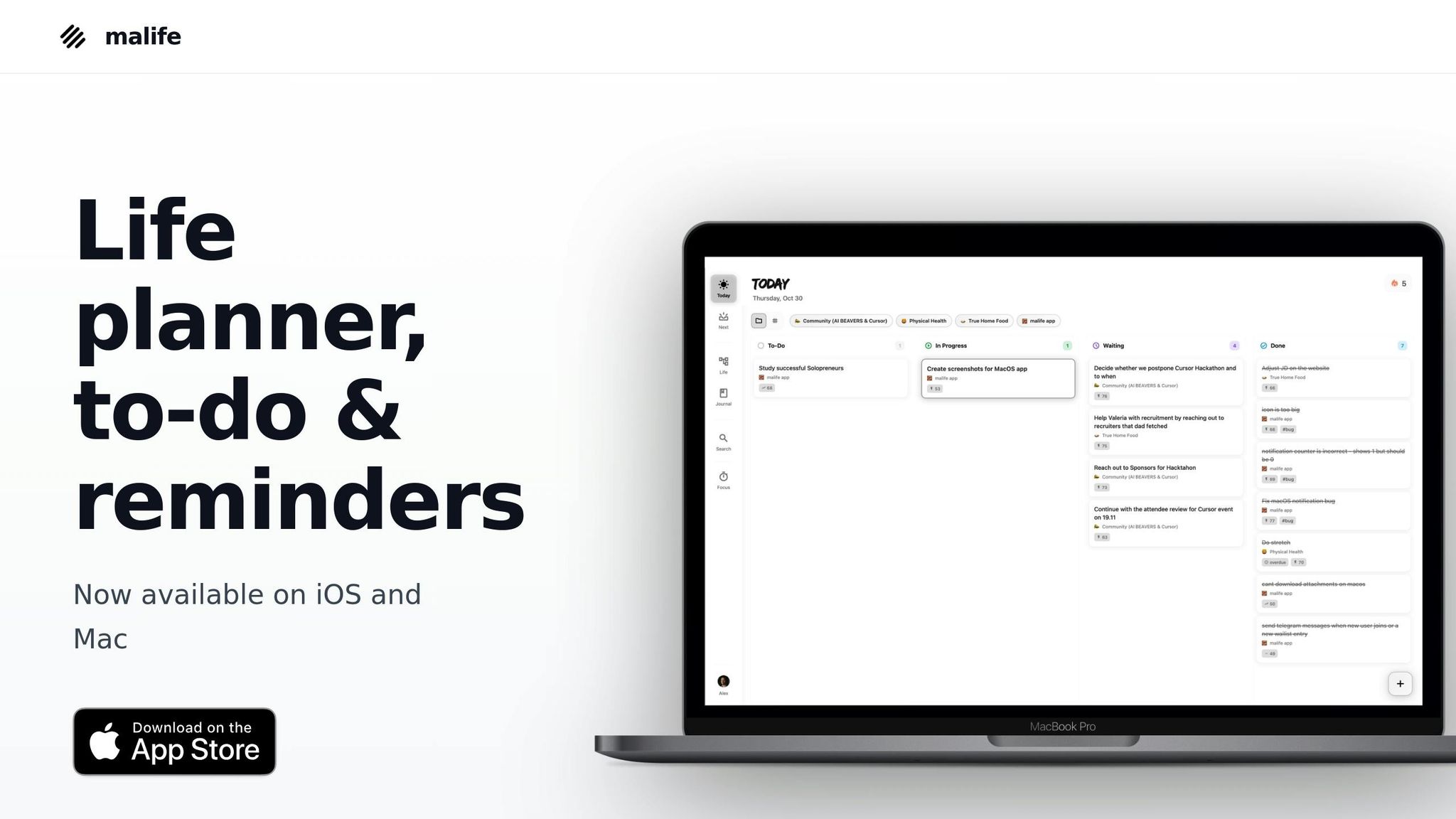
Managing seven different areas of life can feel like an uphill battle, especially when tasks start piling up. That’s where malife comes in - it’s designed to help you keep an eye on the bigger picture while staying focused on what needs attention today. Instead of lumping everything into one chaotic to-do list, malife organizes your life into Life Areas, giving you a clear snapshot of how things are going. With just a glance, you can see which areas - like Environment, Career, Finances, Relationships, Personal Growth, Mental Health, and Physical Health - are thriving and which might need a little extra care. Think of it as your personal control panel, with each area getting its own dedicated space.
To keep you grounded, malife offers Today & Next views, which let you focus on the present without feeling overwhelmed by an endless backlog. Using a Kanban board (To-Do, In Progress, Waiting, Done), you can easily drag tasks through your day and visually track your progress. This system takes inspiration from David Allen’s "Getting Things Done" method, helping you stay on top of priorities. If you’re on a Mac, native keyboard shortcuts (⌘+1 through ⌘+7) make it simple to switch between life areas during your weekly reviews, giving you an easy way to assess where your time and energy are going.
The app's Impact/Effort prioritization helps you focus on what truly matters. Instead of randomly tackling tasks, you can concentrate on high-impact activities that drive results while avoiding burnout from less important commitments. Plus, the voice capture feature makes adding tasks effortless - just say, "Call tax advisor tomorrow for money life area, high priority", and the AI takes care of assigning it for you.
malife also includes a journaling feature that takes progress tracking to another level. With AI analyzing your daily entries, it identifies emotions and patterns across your life areas, helping you uncover stress points and areas of growth. As Ariana Huffington wisely said:
"Performance is actually improved when our life becomes more balanced".
And when it’s time to focus, the focus timer has your back. It shows the task context and notes, helping you stay in the zone without bouncing between apps. Whether you’re cooking a nutritious meal or tackling a major work project, this tool helps you stay productive and on track. malife isn’t just an app - it’s a system designed to bring clarity and consistency to every corner of your life.
Conclusion
Striving for balance in life isn’t about chasing perfection - it’s about understanding that all aspects of your life are interconnected. When you neglect your health, your work can suffer. When you overlook relationships, your mental and emotional well-being might take a toll. Picture these seven areas of life like the spokes of a wheel: if one spoke is significantly shorter, the wheel wobbles, making it harder to move forward smoothly. As Julius Erving wisely said:
"The key to success is to keep growing in all areas of life – mental, emotional, spiritual, as well as physical".
This perspective lays the foundation for making intentional, manageable changes.
You don’t need to overhaul your entire life to make progress. Small, steady improvements in each area can build momentum that naturally spills into others. For example, focusing on your physical health can increase your energy at work, while nurturing strong relationships provides crucial emotional support. Life’s priorities may shift depending on your current circumstances, and that’s perfectly fine.
Take a step back and evaluate all seven areas of your life. Identify which areas are thriving and which could use more attention. Then, set SMART goals - Specific, Measurable, Attainable, Relevant, and Timely - for each area, and check in with your progress regularly, whether weekly or every few months. Balance doesn’t mean giving equal time to everything at once; it’s about aligning your efforts with what matters most right now.
To support this journey, malife is designed to help you organize your life by these key areas, focus on what’s important today, and track your progress without feeling overwhelmed. It’s not just about managing tasks - it’s about living with clarity and purpose. Start small, take that first step, and watch how those small changes ripple across every part of your life.
FAQs
How can I improve my home environment to support better mental health?
A well-organized, calming space can do wonders for your mental well-being. Start by tackling clutter and keeping surfaces clean - this simple step can reduce stress and help you concentrate better. Then, focus on lighting and colors: bring in natural light, opt for soft-white bulbs, and choose calming shades to create a more pleasant and relaxing vibe. Incorporating plants or natural elements like wood or stone can further enhance relaxation while easing stress.
To make these changes stick, try breaking tasks into smaller, manageable steps. For example, start with “clear off the desk” or “place a plant in the living room.” Use reminders, prioritize tasks that have the biggest impact, and track your progress to keep your space balanced and supportive every day.
How can I align my career with my personal values?
To bring your career in line with your personal values, start by pinpointing what matters most to you. Think about the times when you felt genuinely fulfilled and jot down the core values that resonate with those moments. Then, take a close look at your current job. Ask yourself how well your daily responsibilities, the company’s culture, and the opportunities for growth connect with your values. If you notice a disconnect, it might be time to explore career paths or organizations that better reflect your priorities.
Once you’ve identified a direction, map out a clear plan to transition. Break it into practical steps like learning new skills, expanding your network, or applying for roles that align with your values. Tools like the malife app can be a handy way to stay on track. Use it to log your values, outline your plan into smaller tasks, and set reminders for crucial actions - whether it’s reaching out to a mentor or attending a workshop. Regularly tracking your progress can help you stay focused and balanced as you work toward a career that feels more meaningful.
How does financial stability contribute to overall life balance?
Financial stability lays the groundwork for a well-rounded and fulfilling life. When your finances are in check, the stress of managing bills or dealing with unexpected expenses diminishes. This relief allows you to redirect your energy toward achieving personal and professional milestones, nurturing relationships, and prioritizing self-care.
A secure financial footing also enhances other areas of life, like your health and relationships. It opens the door to better choices, such as accessing nutritious food, maintaining a regular exercise routine, and seeking quality healthcare. At the same time, it eases the mental burden that financial worries can place on your well-being and social interactions. By managing your money wisely, you create space for personal growth while maintaining balance across various aspects of life.
A tool like malife can be a game-changer in keeping your financial tasks organized. By integrating these tasks into your broader life goals, setting reminders, and focusing on what matters most, you can ensure your financial health supports your overall well-being without overshadowing other priorities.