
How Voice Assistants Help Prioritize Tasks
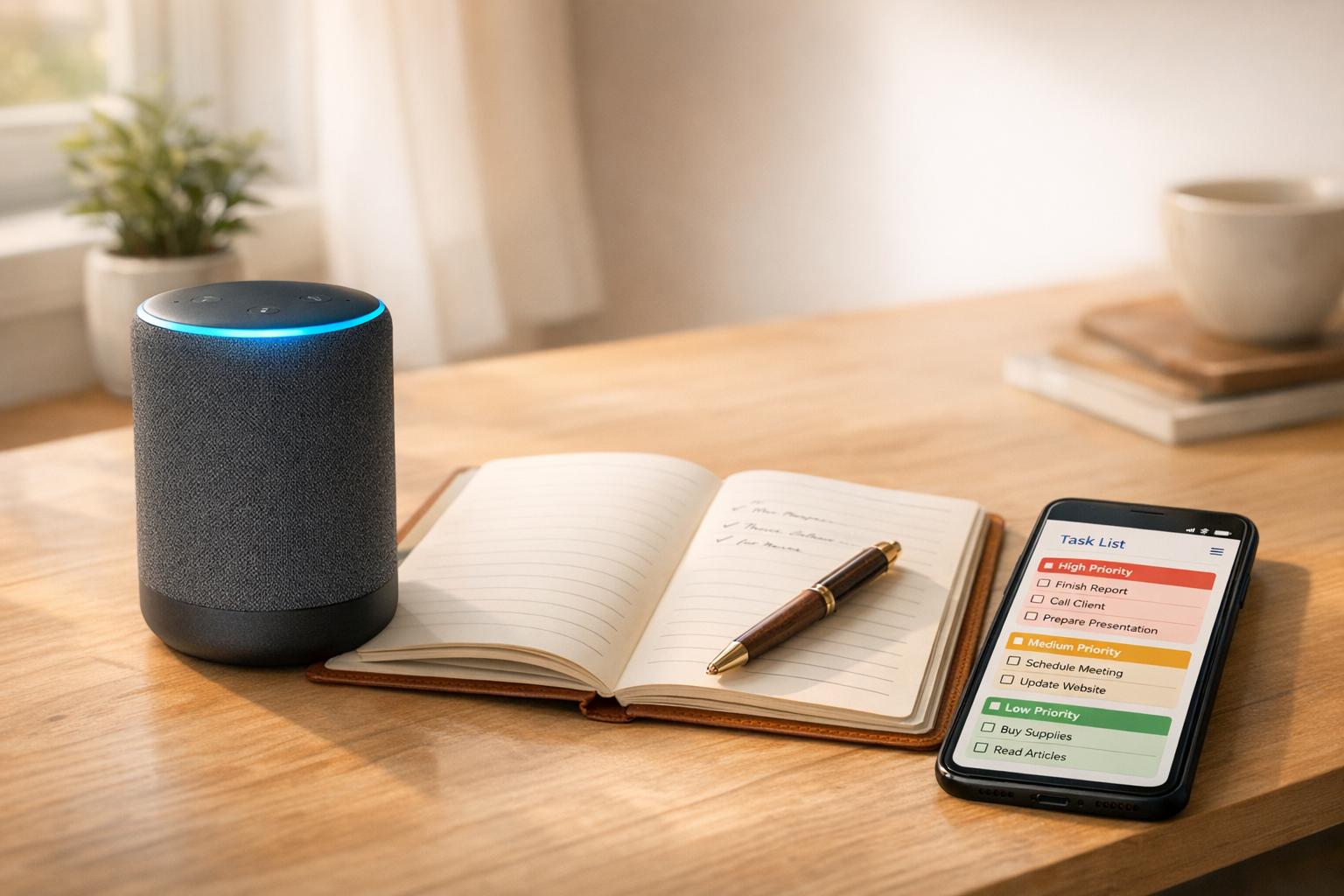
How Voice Assistants Help Prioritize Tasks
Voice assistants are transforming how we manage daily tasks. By letting you add tasks through voice commands, they reduce the need for manual typing and help organize your day more efficiently. Here's how they make life easier:
- Instant Task Input: Speak your tasks as they come to mind - no typing required.
- Smart Organization: Tasks are sorted into categories like work, health, or family automatically.
- Prioritization Made Easy: AI analyzes urgency and importance, helping you focus on what matters most.
- Quick Reminders: Set deadlines and reminders with simple commands like "remind me at 3 PM."
- Effort vs. Impact: Systems like malife highlight tasks that offer the most value with the least effort.
Voice assistants reduce stress by streamlining task management, making it easier to stay on top of responsibilities without feeling overwhelmed.
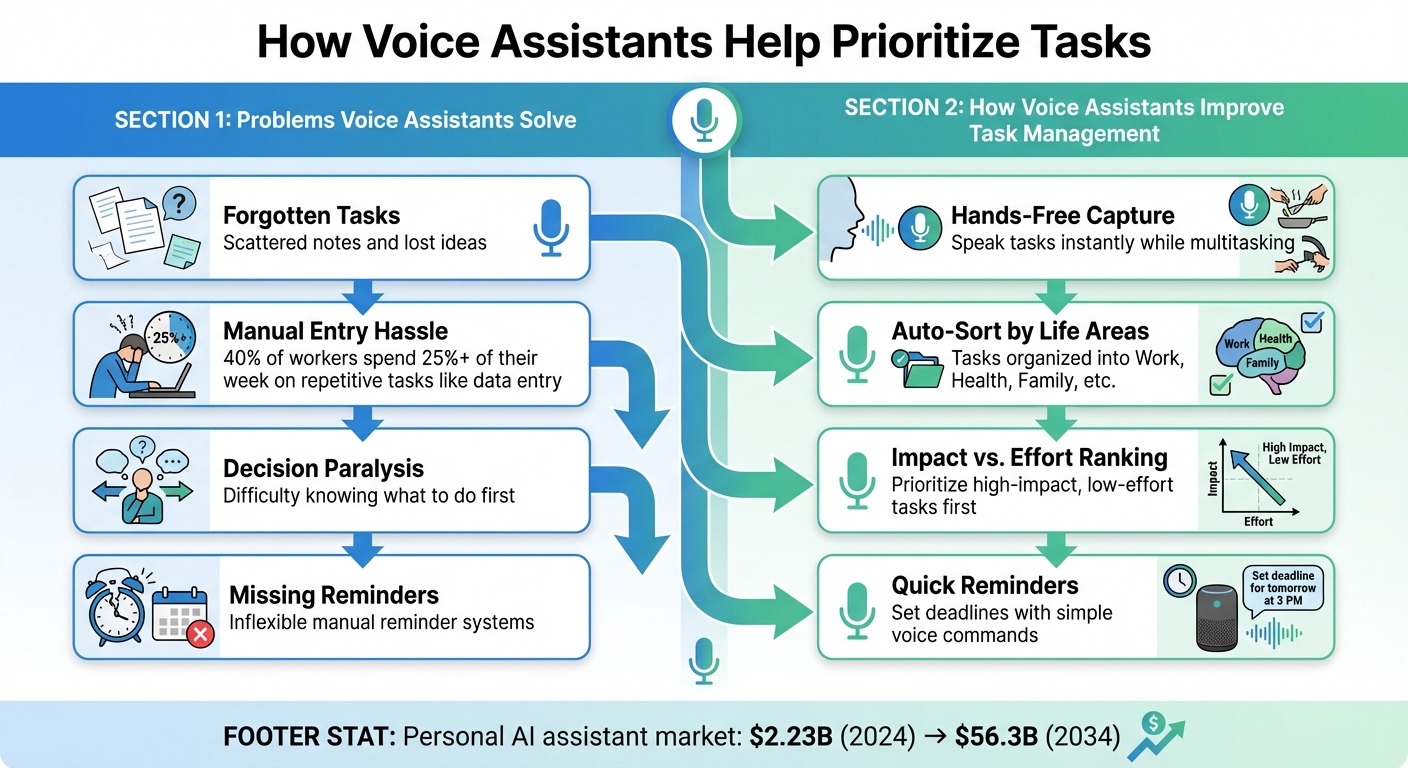
How Voice Assistants Prioritize Tasks: 4 Key Problems and Solutions
Task Prioritization Problems Voice Assistants Solve
Forgotten Tasks and Scattered Notes
Ever had a great idea or an important task pop into your head, only to lose it minutes later? Sticky notes, notebooks, or random scraps of paper can fail you when it comes to keeping track of everything. Voice assistants step in to solve this by letting you capture tasks instantly - no pen, no paper, no typing required. With everything stored in one place, you don’t have to waste energy trying to remember where you wrote something down. Plus, using voice commands avoids the disruption caused by manually jotting tasks while you're in the middle of something else.
The Hassle of Adding Tasks Manually
Stopping what you're doing to type out a task can throw off your workflow, and it’s a common frustration. In fact, over 40% of workers say they spend at least a quarter of their week on repetitive tasks like data entry, and 27.5% of accounting professionals report issues with incorrect data input at their firms. Voice assistants eliminate this hassle entirely. Whether you’re cooking, driving, or in a meeting, you can simply speak your tasks aloud. As Voiset explains:
"It is not always possible to stop and take a few minutes to create a text note. Often a new task 'arrives' spontaneously, and you need to write it down as quickly as possible so you don't forget. That's why Voiset proves indispensable: you can create a note with your voice. Voiset will then offer to turn it into a task and add it to your schedule."
Trouble Deciding What to Do Now
Having a long list of tasks is one thing; knowing where to start is another. When everything feels equally urgent, it’s easy to get stuck in a cycle of indecision. Voice assistants equipped with Natural Language Processing (NLP) take the guesswork out of prioritization. By analyzing your spoken input, they can identify urgency, deadlines, and importance, helping you organize tasks effectively. High-priority items are flagged, while less critical ones are set aside, allowing you to focus on what needs your attention right now.
Missing Reminders and Incomplete Tasks
Setting reminders manually can be a chore, and they often lack flexibility. Voice assistants make this process effortless. A simple command like "remind me to call Mom at noon tomorrow" is all it takes. Tools like Microsoft Cortana integrate seamlessly with apps like Microsoft To Do, syncing reminders across devices for added convenience. Systems like malife take it a step further, offering persistent reminders with quick adjustment options - like adding 10 minutes, an hour, or even a day. Customizable repeat settings also adapt to your schedule, ensuring you stay on top of tasks without extra effort.
How Voice Assistants Improve Task Prioritization
Adding Tasks Without Using Your Hands
Voice assistants make it easy to capture tasks the moment they cross your mind - without needing to stop what you're doing. Whether you're driving, cooking, or on the go, you can simply speak your task aloud and let the assistant handle the rest. Recent updates have introduced features that convert spoken words into tasks, notes, or lists. These can be activated through mobile apps or home screen widgets, making the process seamless and reducing the mental effort of remembering everything.
"Talking is faster than typing, so you never lose a spark of inspiration".
The advantage is obvious - speaking is naturally faster than typing, making it easier to offload ideas without disrupting your flow. Once recorded, the system organizes tasks into relevant categories, ensuring they're ready to tackle when you are.
Sorting Tasks into Life Areas and Projects
After capturing a task, the next challenge is deciding where it belongs. Modern voice assistants use advanced language models to understand your natural speech and sort tasks automatically. This feature becomes even more effective when paired with malife's Life Areas framework. Instead of dumping everything into a single list, you can assign tasks to specific areas of life - like "Work", "Health", or "Family" - just by speaking. The app then structures your tasks accordingly, giving you a clear picture of what’s in progress and what requires immediate attention, all without manual sorting.
Ranking Tasks by Impact and Effort
Deciding what to tackle first can be tricky, but voice assistants now help prioritize tasks through natural speech. You can assign priority levels, due dates, and project details just by saying something like, "high priority task: finish the budget report by Friday." The system flags the task appropriately without requiring you to lift a finger. malife enhances this with its Impact vs. Effort framework, which organizes tasks by how much they contribute versus the effort required. This approach highlights high-impact, low-effort tasks - the kind that can make a big difference quickly. By focusing on these, you avoid getting lost in busy work and stay aligned with your goals. Plus, prioritization integrates seamlessly with scheduling tools, ensuring reminders and deadlines are set in just a few words.
Setting Reminders and Due Dates Quickly
Voice assistants make setting reminders and deadlines a breeze. You can say, "add finish report by 3 PM to my to-do list", and it’s instantly scheduled with a reminder. The growing popularity of personal AI assistants is evident, with the global market projected to expand from $2.23 billion in 2024 to $56.3 billion by 2034. malife further simplifies this with persistent reminders. Need to adjust? You can easily push reminders by 10 minutes, 1 hour, or even a day. Customizable repeat patterns ensure your schedule adapts to changing plans. As your day evolves, rescheduling tasks becomes effortless, keeping your agenda up-to-date and stress-free.
Creating a Voice-Based Task Management System
Voice assistants have become great tools for organizing and prioritizing tasks. Here's how you can build a voice-based task management system that keeps everything structured and manageable.
Setting Up Life Areas and Projects
Start by dividing your life into clear categories instead of letting tasks pile up into one overwhelming list. Think of areas like Work, Health, Family, Finance, or Personal Growth. This structure helps you see where your attention is needed most. Tools like malife allow you to set up these categories so tasks are sorted automatically. For example, when you say, “Add review quarterly budget to Work,” the system knows exactly where to file it. Within each area, related tasks can be grouped into projects, keeping everything neat and organized. This setup ensures no task gets lost in chaos and gives every responsibility a clear place. Once your life areas are ready, the next step is capturing tasks as they come up throughout the day.
Capturing and Sorting Tasks Daily
Make it a habit to capture tasks as soon as they pop into your head. With systems like malife, you can simply speak your tasks aloud, and they’ll be recorded and categorized instantly. Advanced AI tools can even pull tasks directly from your emails, meeting notes, or conversations by identifying phrases like “I’ll send” or “follow up next week”. At the end of each day, take a few minutes to review these tasks, adjust priorities, and set due dates. This daily check-in keeps your task list organized without requiring constant effort. Once everything is sorted, managing your tasks in real-time becomes much easier.
Working from Today and Next Lists
One of the biggest productivity pitfalls is trying to tackle everything at once. A massive backlog can feel overwhelming and paralyze your focus. Systems like malife use a kanban-inspired approach with Today and Next lists to simplify things. The Today list shows only the tasks you’re working on now, while the Next list holds a small queue of what’s coming up. Everything else stays safely stored in your Life Areas until you’re ready for it. This method, influenced by David Allen’s Getting Things Done, keeps you focused and reduces stress. As you complete a task, you can pull the next one forward without endlessly scrolling or second-guessing what to do next. By turning a chaotic backlog into clear, actionable steps, malife helps you stay productive and in control.
Conclusion
Voice assistants have reshaped the way we handle tasks, making it possible to capture ideas as quickly as they come to mind - no need to pick up your phone or computer. Paired with malife's structured system, this feature turns fleeting thoughts into actionable tasks. With voice capture, you can record tasks instantly, even while multitasking. Then, tools like Life Areas, Today and Next lists, and Impact/Effort prioritization ensure those tasks are organized and purposeful.
Instead of juggling scattered notes, this system categorizes your tasks into Life Areas and prioritizes them effectively. The result? A streamlined workflow that highlights exactly what needs your attention and when. By reducing mental clutter, it helps lower stress and allows you to focus on getting things done, rather than trying to remember everything. It’s a shift from chaos to clarity, giving you a practical way to stay on top of what matters most.
FAQs
How can voice assistants help you prioritize tasks?
Voice assistants make managing tasks effortless by transforming your spoken commands into organized to-dos or reminders. Thanks to advanced natural language processing, they can pick out key details - like dates, times, and names - and automatically create tasks or calendar events. For instance, saying, “Remind me to call Sarah tomorrow at 10 a.m.” results in an instant, hands-free reminder, saving you the trouble of manual entry.
To help you focus on what’s important, AI-powered assistants evaluate factors like urgency, importance, and your habits. Tools like malife take this a step further by allowing you to capture tasks with your voice while automatically assigning impact vs. effort scores. The app’s “Today & Next” view then highlights your most pressing tasks, keeping your priorities clear. With persistent reminders and intelligent scheduling, these assistants ensure nothing critical falls through the cracks, making task management smoother and less stressful.
Can voice assistants help organize tasks into specific life areas?
Voice assistants in malife make staying organized effortless. Just speak your task naturally, and malife will automatically sort it into the correct Life Area. This helps keep everything structured and aligned with what matters most to you.
How do voice assistants make task management easier?
Voice assistants make managing tasks a breeze by letting you add and organize them with just your voice. Thanks to natural-language processing, these assistants can interpret your commands and instantly create actionable tasks. This hands-free convenience is ideal for multitasking, allowing you to jot down ideas or to-dos while on the move, so you don’t risk forgetting something important.
With malife, you can simply speak a task, and the app takes care of the details for you. It automatically assigns due dates, tags, or Life Areas, seamlessly integrating the task into your workflow. Plus, tools like prioritizing tasks based on impact versus effort and customizable reminders - like “remind me in 10 minutes” or “repeat daily” - help you stay on track with your goals. It’s all about saving time and keeping your focus where it matters most.